

As an Amazon Associate, I earn from qualifying purchases. This post contains affiliate links, which means I may earn a commission at no extra cost to you.
A small linen closet can become frustrating surprisingly quickly. Towels topple when you pull one from the bottom, pillowcases disappear from their matching sheets, and bulky blankets take up space that everyday linens need.
The solution is not necessarily buying more storage products. It is creating a system that fits your shelves, separates different types of linens, and stays easy to maintain after laundry day.
These linen closet organization ideas for small spaces focus on practical changes you can make with the space you already have, plus a few storage tools when they solve a specific problem.
Quick Answer: How Do You Organize a Small Linen Closet?
Start by removing unused linens, grouping towels and bedding by category, and measuring your shelves before buying organizers. Keep everyday items within easy reach, use shelf dividers to stabilize folded stacks, store matching sheet sets together, and move bulky seasonal bedding into a separate storage solution.
The best system is one that makes it easy to find an item and put it back without rearranging the entire closet. A useful test is whether someone else in your household can put the linens away correctly without asking where they belong.
15 Linen Closet Organization Ideas for Small Spaces
1. Remove Linens You No Longer Use
Before adding bins or rearranging shelves, decide which items genuinely need to stay in the closet. Old towels, worn-out sheets, unmatched pillowcases, and extra blankets can occupy valuable space for years without being used.
Sort everything into three groups: keep, repurpose, and donate or discard when appropriate. Towels that are no longer comfortable for bathing may still work as cleaning cloths if they are clean and suitable for that purpose.
Why it works: Reducing the number of items makes the remaining storage space easier to manage without purchasing additional organizers.
2. Give Each Shelf a Specific Purpose
When towels, bedding, toiletries, and cleaning supplies share the same shelf, items tend to migrate wherever there is room. Assigning each area a clear purpose reduces that problem.
- Eye-level shelves: everyday towels and frequently used sheets.
- Upper shelves: lightweight guest linens or seasonal items.
- Lower shelves: heavier blankets and larger storage containers.
- Small baskets: washcloths, pillowcases, and other loose items.
Adjust these zones to suit your household. If children use the closet, place their towels and bedding where they can reach them safely.
3. Measure Your Shelves Before Buying Storage Products
A storage bin can look ideal online and still fail to fit your closet. The outside width of a cabinet does not tell you how much usable space remains between the shelves, door frame, and hinges.
Measure the clear width, depth, and height of each shelf. Also check the closet opening to make sure a container can pass through the door.
For deep shelves, consider whether you can reach items at the back without removing everything in front. For narrow shelves, smaller containers or shorter stacks may work better.
Practical tip: Measure first, then shop. Buying organizers before checking the available space can create another storage problem instead of solving the original one.
4. Keep Sheet Sets Together
Finding a fitted sheet without its matching pillowcases is a common reason linen closets become disorganized. Keep each bed’s sheet set together so you can grab everything at once.
One simple method is to fold the fitted sheet, flat sheet, and pillowcases into a compact bundle, then place the bundle inside one pillowcase. You can also use a designated bin for each bed size.
If you use labeled containers, choose clear labels such as Twin, Full, Queen, King, or Guest Room. The goal is to identify the correct set without unfolding several piles.
5. Fold Towels Consistently
Different folding styles can make a shelf look uneven and leave wasted gaps. Choose one practical folding method for each towel category and keep the finished stacks similar in width.
For a narrow shelf, fold towels into compact rectangles. On a deeper shelf, you may prefer a wider fold or a front-facing arrangement that makes each stack easier to see.
Do not sacrifice easy access for a perfect display. If pulling one towel causes the entire stack to collapse, the stack is too high, too deep, or poorly supported.
6. Use Shelf Dividers to Stop Stacks From Falling
If folded towels or blankets slide sideways every time you remove one, shelf dividers can help keep separate stacks in place. They are particularly useful when a shelf is wide enough for several categories but does not have built-in partitions.
Before installing dividers, check the shelf thickness, available height, and the amount of room needed to remove items comfortably. Arrange the dividers around the actual width of your folded linens rather than forcing every stack into the same size.
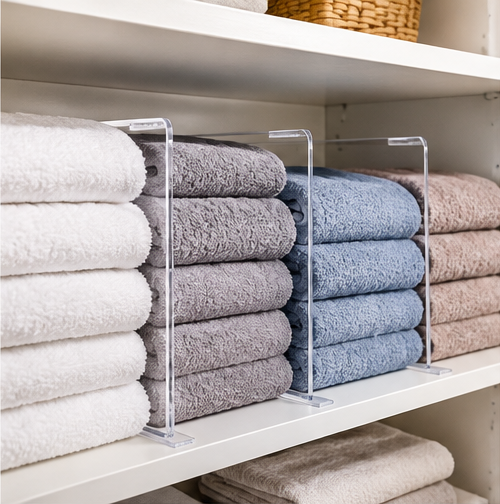
A clear acrylic divider is one option for this problem. The HBlife 6-pack clear shelf dividers is designed for separating items on shelves, including folded clothing and other stored belongings.
Check the product dimensions and shelf compatibility before ordering. Dividers are most useful when the shelf itself is suitable and the stacks are not overloaded.
Best for: Closets where folded towels, sheets, or blankets repeatedly lean or fall over.
7. Group Small Linens in Fabric Storage Bins
Washcloths, hand towels, pillowcases, and spare sheet sets can become difficult to manage when they are stored in loose piles. A dedicated container gives each category a boundary and makes it easier to return items after washing.
Fabric storage bins can be useful when you want to keep several categories separate without installing permanent shelves. For a small closet, choose a size that fits the shelf and leaves enough room to remove the bin.
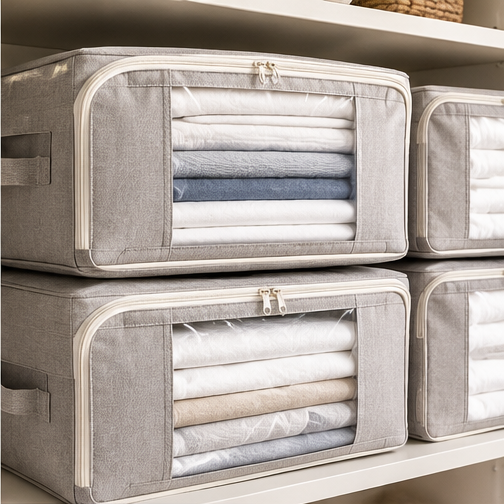
The three-piece, 40-liter fabric storage bin set listed below includes a metal frame, lid, clear window, zippers, and handles according to its product description.
Its larger capacity may suit households storing multiple linens together, but measure your shelf carefully. A large bin is not automatically the best choice for a narrow or shallow closet.
Best for: Keeping larger groups of towels, sheets, or other household textiles contained in one place.
8. Store Bulky Bedding Separately
Comforters, thick blankets, and spare pillows can consume most of a small linen closet. If you use them only during certain seasons, they may not need to occupy the easiest-to-reach shelf all year.
First consider whether the bedding can be stored elsewhere, such as under a bed or on an appropriate bedroom closet shelf. If the linen closet is the only available location, use a designated container or compression bag when suitable for the bedding material.
Always follow the care instructions for the specific comforter or blanket. Not every filling or fabric is suitable for prolonged compression.
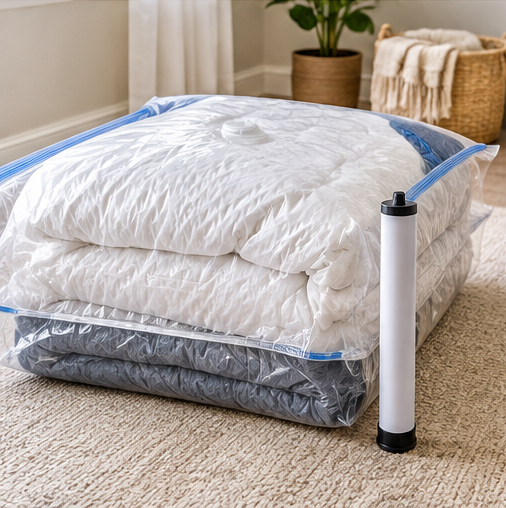
The XXL jumbo vacuum storage bags in the product link are listed as measuring 47.2 by 35 inches and include a hand pump. They are intended for larger items such as comforters, blankets, and pillows.
Check the bag dimensions and your available storage area before purchasing. Compression may reduce volume, but the packed bag still needs a safe, practical place to go.
Best for: Bulky seasonal bedding that takes up too much room when stored loosely.
9. Use Lidded Fabric Bags for Seasonal Linens
Not every blanket needs to be vacuum-compressed. Some households simply need a way to keep spare bedding together and reduce exposure to dust while it sits unused.
Fabric storage bags with lids, zippers, handles, and viewing windows can make seasonal items easier to contain and identify. They can also be moved to another closet when you need the linen shelves for everyday supplies.
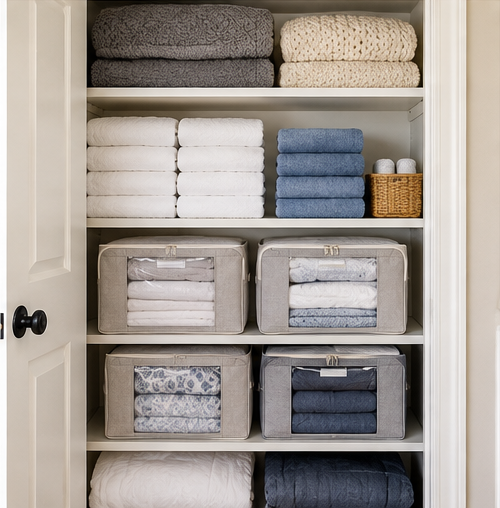
The six-pack foldable fabric storage bags linked below are described as having lids, clear windows, zippers, and handles. Compare the dimensions with the shelf opening and consider how heavy each filled bag will be to lift.
Use these bags for items that benefit from being grouped together. Avoid packing linens away while they are damp, and make sure stored fabrics are clean and fully dry.
Best for: Storing spare blankets, bedding, and seasonal textiles in separate, portable containers.
10. Keep the Most-Used Linens at Eye Level
Reserve the easiest-to-reach shelves for the items your household uses most often. Depending on your routine, that may mean bath towels, everyday sheets, or hand towels.
Guest bedding and seasonal blankets can go higher or lower, provided the weight and location are safe to access. Avoid putting heavy containers on high shelves where lifting them down could be awkward or risky.
This arrangement reduces the need to move several items just to reach one clean towel.
11. Use the Pillowcase Method for Matching Sheet Sets
If you do not want to buy another organizer, use a pillowcase from each set as a storage pouch. Fold the remaining pieces and place them inside the matching pillowcase.
This keeps the fitted sheet, flat sheet, and pillowcases together. If the bundle becomes too bulky, store the pieces in a small bin labeled by bed size instead.
The best method is the one you can repeat after laundry day without having to refold the entire closet.
12. Use Vertical Storage Where It Makes Items Easier to See
On suitable shelves, smaller folded linens may be easier to identify when arranged upright rather than stacked in tall piles. This works especially well for washcloths, hand towels, and some sheet bundles.
Vertical storage is not ideal for every blanket or towel. Test whether the folded item stands securely and can be removed without knocking over the rest.
If vertical folding does not work with your shelf depth, shorter horizontal stacks may be more practical.
13. Avoid Filling Every Inch of the Closet
A closet that looks full to the edge may be difficult to maintain. If there is no room to remove an item and return it easily, the system will likely become messy again.
Leave enough clearance to pull out containers and remove folded linens. If clean laundry no longer fits, reduce the quantity stored there or move less frequently used items elsewhere.
Extra empty space is not wasted space when it makes everyday storage easier.
14. Keep Household Supplies Separate from Clean Linens
Some linen closets also hold tissues, toiletries, first-aid supplies, or cleaning products. Mixing these items with clean towels and sheets can make the closet harder to navigate.
If these supplies must share the same closet, give them a separate, clearly defined container or shelf area. Keep cleaning chemicals securely stored according to their labels and away from children and pets.
For more ideas on making another crowded household storage area easier to use, see our guide to under-sink organization ideas.
15. Create a Simple Reset Routine
A linen closet stays organized when the system is easy enough to maintain during normal household routines. You do not need a major reorganization every week.
- Return clean towels to their assigned shelf.
- Put sheet sets back in their correct category.
- Refold any stack that becomes unstable.
- Return seasonal items to their designated containers.
- Remove linens that are damaged or no longer needed.
A quick reset after laundry day is often more effective than waiting until the closet becomes completely disorganized.
Choose Storage by the Problem, Not by Appearance
Before buying an organizer, identify what is actually failing in your closet. A product should solve one clear problem and fit the shelf you already have.
- Your towel stacks fall sideways: Measure the shelf and consider dividers that fit its thickness and height.
- Small items keep getting mixed together: Use a modest-sized bin for one category, such as washcloths or pillowcases.
- Seasonal comforters crowd out everyday towels: First see whether they can move to under-bed storage; use compression bags only if the bedding care instructions allow it.
- You cannot tell what is inside a container: A clear window or a simple front label may solve the problem without buying a more complicated organizer.
Small-closet rule: Do not buy all four product types by default. Choose only the organizer that fixes the problem you identified, then check whether the remaining space is still easy to access.
How to Choose the Right Linen Closet Storage Products
Before purchasing any organizer, identify the specific problem you need to solve. Different products serve different purposes, and buying several types at once can waste both money and shelf space.
- Shelf dividers: Consider these when folded stacks repeatedly lean or collapse.
- Fabric storage bins: Useful for grouping smaller linens or separating household categories.
- Fabric storage bags: Suitable for containing spare bedding that you want to keep together and move easily.
- Vacuum storage bags: Worth considering when suitable bulky bedding takes up too much volume.
Measure first, check product dimensions, and buy only what fits your layout. A simple system using existing shelves may work better than filling the closet with new containers.
Common Linen Closet Organization Mistakes
Buying Bins Before Measuring
Containers that are too deep or too tall can block access to the shelf behind them. Measure the usable opening and shelf clearance before ordering.
Making Stacks Too High
Tall stacks are difficult to maintain when the bottom item is needed. Divide large piles into smaller stacks or use suitable dividers.
Mixing Different Categories Together
When towels, sheets, and blankets share the same pile, finding one item disturbs everything else. Give each category a defined place.
Compressing Bedding Without Checking Its Care Instructions
Some materials may not be suitable for prolonged compression. Follow the bedding manufacturer’s care instructions and make sure items are completely dry before storage.
Creating a System That Is Too Complicated
Too many tiny categories can make putting laundry away feel like work. Use broad categories that match your household’s actual habits.
Related Home Organization Guides
If you are working through several storage areas, these related guides may help you build a consistent system throughout your home:
- Small closet organization ideas for making better use of limited hanging and shelf space.
- Laundry room organization ideas for keeping laundry supplies and clean items easier to manage.
- How to label storage bins for making stored items easier to identify.
- Bathroom cabinet organization ideas for managing toiletries and everyday bathroom essentials.
- Under-bed storage ideas for considering alternative places to keep seasonal bedding.
Frequently Asked Questions
What should go in a linen closet?
Common items include bath towels, hand towels, washcloths, sheet sets, pillowcases, guest bedding, and spare blankets. Depending on the home, you may also keep a limited amount of household backstock in a separate area.
How do you organize a very small linen closet?
Keep only the linens you use, group items by category, place frequently used items within easy reach, and measure the shelves before adding containers. Store bulky seasonal bedding elsewhere when possible.
Are shelf dividers worth using?
They can be useful when folded stacks repeatedly lean or collapse. Check the divider dimensions and shelf compatibility, and avoid overcrowding the shelf.
Should you use vacuum storage bags for comforters?
They may help reduce the storage volume of suitable comforters and blankets. Check the manufacturer’s care instructions before compressing bedding, and store it clean and fully dry.
How can you keep a linen closet organized long term?
Give every category a consistent home and return clean linens to the same location after laundry day. If items no longer fit easily, reduce the quantity stored or revise the shelf arrangement.
Final Thoughts
The most useful linen closet organization ideas are the ones that solve your actual storage problems. Start by removing unused items, assigning shelves by category, and keeping matching sheet sets together. Add dividers or containers only when they make the closet easier to use.
You do not need a perfectly styled closet. You need a practical system where towels are easy to grab, bedding stays together, and everything can be put away without starting over.