

Disclosure: This article contains affiliate links. If you purchase through links in this article, we may earn a commission at no additional cost to you.
Finding effective under sink organization ideas can be challenging, especially when pipes, cleaning supplies, and awkward cabinet shapes take up valuable space. The area under the kitchen sink is often one of the hardest places to keep organized.
But you do not need a large kitchen or expensive storage system to make better use of this space. A few simple changes can make cleaning supplies easier to reach, reduce clutter, and help you use the cabinet more efficiently.
In this guide, you’ll find 15 practical under sink organization ideas for small kitchens, including simple storage solutions, ways to work around plumbing, and easy systems that are easier to maintain.
In this guide:
- Measure Around the Pipes First
- Empty the Entire Cabinet
- Create Cleaning Supply Zones
- Use Bins to Group Similar Items
- Use a Two-Tier Organizer
- Make Deep Storage Easier to Reach
- Use the Cabinet Door
- Keep Spray Bottles Easy to Access
- Give Small Items Their Own Space
- Consider a Lazy Susan
- Protect the Cabinet Floor
- Keep Sponges and Cloths Together
- Use Labels for Storage Zones
- Keep Frequently Used Items in Front
- Create a System You Can Maintain
1. Under Sink Organization Ideas: Measure Around the Pipes First
Before buying any organizer, take a few measurements inside the cabinet.
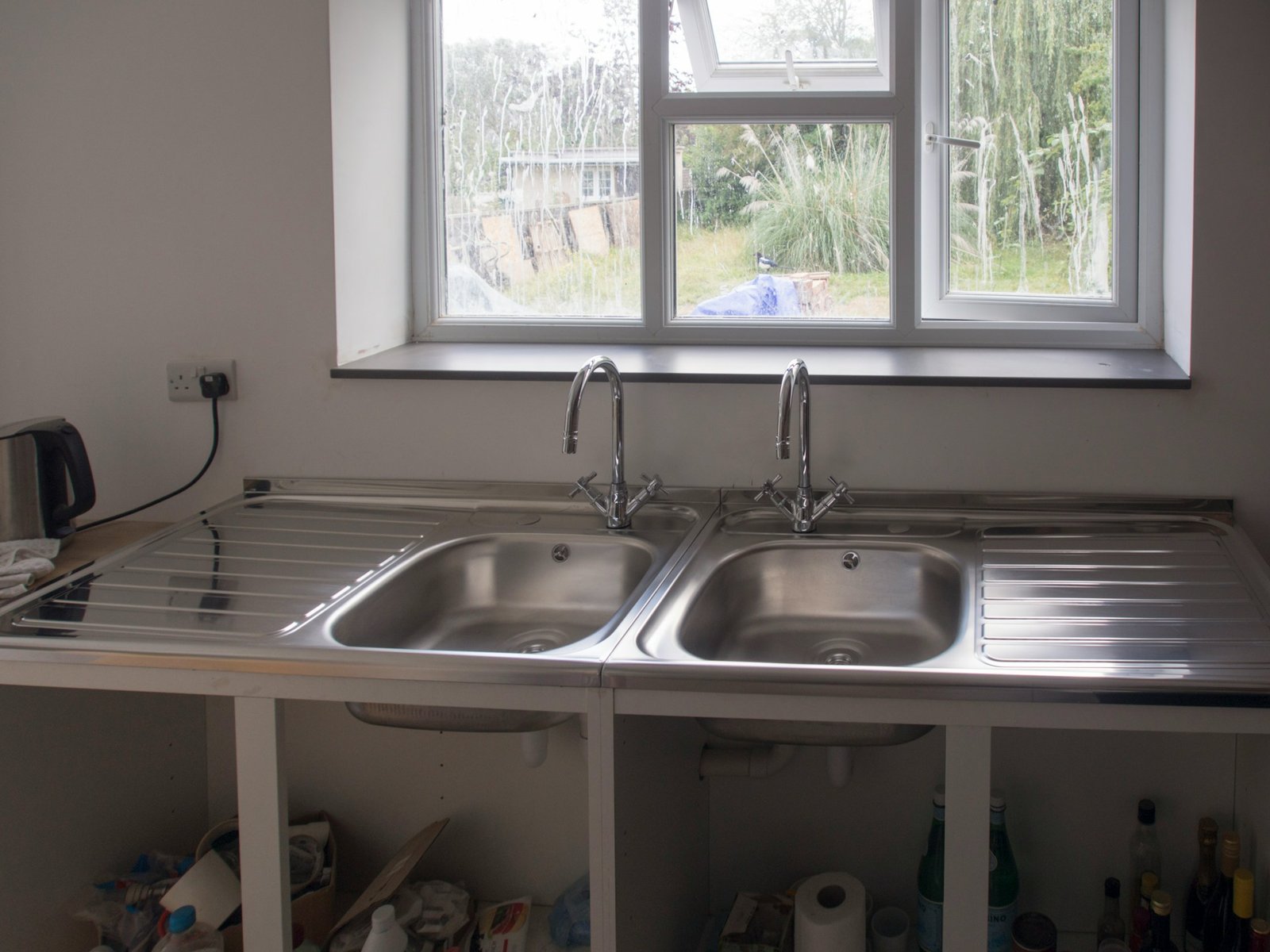
The pipes underneath the sink can take up more space than expected, so a storage product that looks perfect online may not fit once you place it inside the cabinet.
Measure the width, depth, and available height on both sides of the plumbing. Also check how far the cabinet doors open.
This simple step can help you avoid buying storage that blocks the pipes or prevents the cabinet from closing properly.
2. Empty the Entire Cabinet
One of the easiest ways to improve an under-sink cabinet is to start with a completely empty space.
Take everything out and group the items on the floor or a nearby counter. This makes it much easier to see what you actually use and what has simply accumulated over time.
Discard empty containers and move items that belong somewhere else. Once the cabinet is empty, wipe down the interior before putting anything back.
Starting with a clean space makes the rest of your organization system much easier to build.
3. Create Cleaning Supply Zones
Instead of placing every cleaning product wherever there is room, create simple zones based on how you use them.
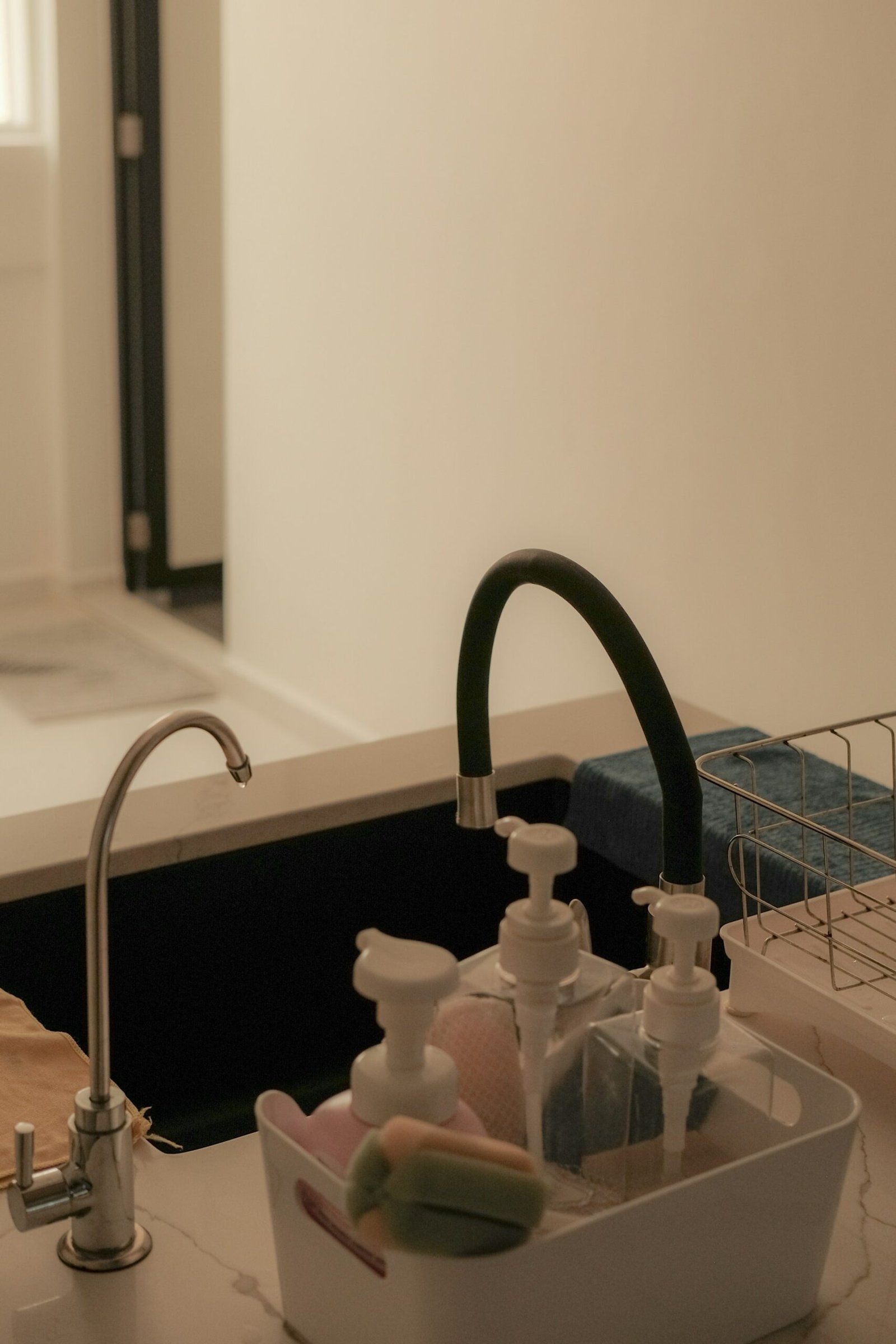
For example, you could keep everyday dishwashing supplies in one area and less frequently used cleaning products in another.
You can also create a separate zone for brushes, sponges, cloths, and replacement supplies.
When choosing cleaning products, you can also review the U.S. Environmental Protection Agency’s Safer Choice program for information about products that meet its ingredient and performance standards.
Grouping similar items together makes it easier to find what you need without searching through the entire cabinet.
4. Use Bins to Group Similar Items
Small storage bins can turn a messy cabinet into a collection of simple, manageable zones.
Instead of having individual bottles and accessories spread across the cabinet floor, place related items together in separate containers.
For example, one bin can hold extra sponges and brushes while another holds less frequently used cleaning products.
Choose bins with handles when possible. Being able to pull an entire container forward is often easier than reaching into the back of a deep cabinet.
5. Use a Two-Tier Organizer
Under-sink cabinets often have unused vertical space, especially above shorter bottles and containers.
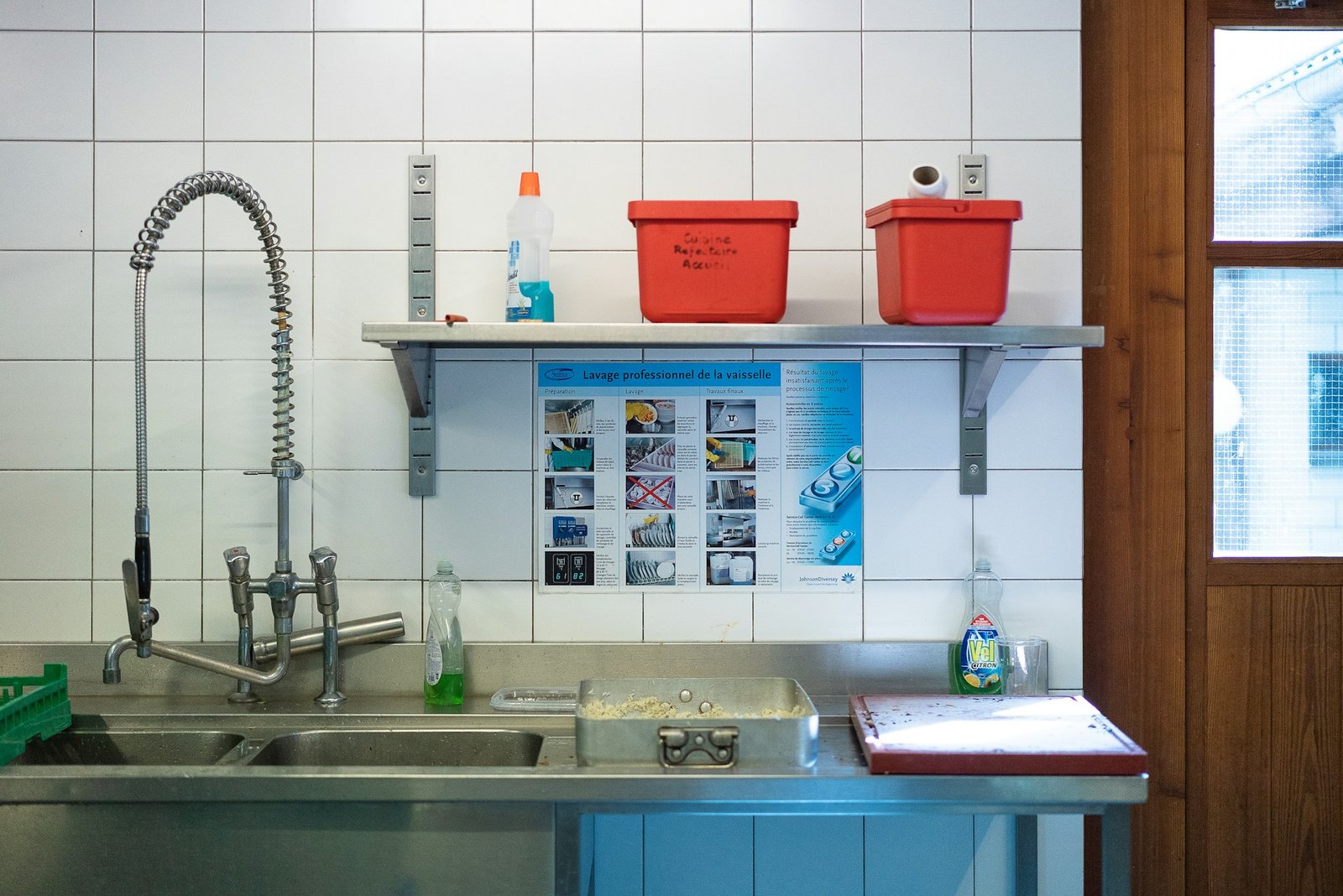
A two-tier organizer can make better use of that height by creating separate levels for different supplies.
Keep frequently used items on the easier-to-reach level and reserve the lower or less accessible area for backup products.
Before purchasing one, make sure the organizer is designed to work around your particular plumbing configuration.
6. Make Deep Storage Easier to Reach
Deep cabinets can create a common problem: items in the back are difficult to see and easy to forget.
Pull-out organizers or sliding baskets can make these areas much easier to access.
Instead of reaching behind several bottles, you can pull the storage unit toward you and see what is inside.
This can be particularly useful for heavier cleaning products or backup supplies that are not needed every day.
7. Use the Cabinet Door
The inside of the cabinet door is often overlooked when organizing under the sink.
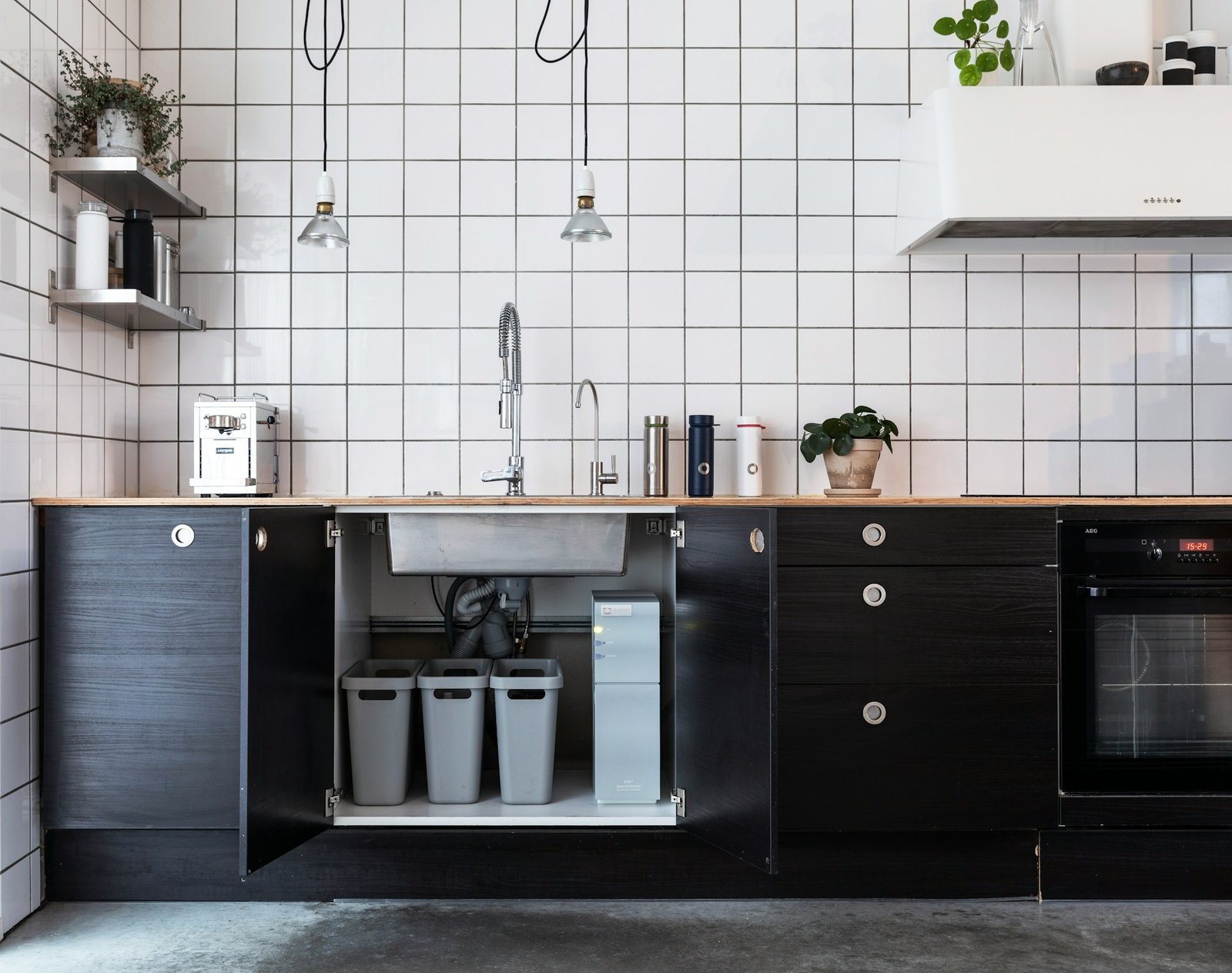
A small door-mounted organizer can provide extra storage without taking up much floor space inside the cabinet.
This area can work well for lightweight items such as sponges, brushes, gloves, cloths, or small cleaning accessories.
Just make sure the added storage does not interfere with the cabinet frame, hinges, or plumbing.
8. Keep Spray Bottles Easy to Access
Spray bottles can quickly make an under-sink cabinet feel crowded because of their height and irregular shapes.
Keep the bottles you use most often near the front of the cabinet or in a dedicated section.
If you have several similar products, grouping them together can also make it easier to see when you are running low.
A simple system is often more useful than trying to fit every bottle into one large container.
9. Give Small Items Their Own Space
Small cleaning accessories can disappear easily inside a deep cabinet.
Sponges, gloves, brushes, replacement heads, and small cloths are easier to manage when they have a designated container.
Use shallow bins or small containers so these items remain visible instead of getting buried underneath larger products.
The goal is to make every small item easy to locate without having to move several things first.
10. Consider a Lazy Susan
A Lazy Susan can be useful when you have several bottles or containers that need to remain accessible.
Instead of reaching behind the front row, you can rotate the organizer to bring another product forward.
This works particularly well for rounded bottles, frequently used cleaning products, or items that are difficult to stack.
As always, measure the available space first. A rotating organizer needs enough clearance to turn properly inside the cabinet.
11. Protect the Cabinet Floor
The area under a sink can be exposed to moisture, cleaning products, and accidental spills.
A waterproof cabinet liner or removable tray can make the space easier to clean and help protect the cabinet surface.
This is especially useful if you store liquid cleaning products underneath the sink.
Choose a surface that can be removed and wiped clean when necessary rather than creating another difficult-to-maintain layer.
12. Keep Sponges and Cloths Together
Small cleaning tools are much easier to manage when they have a dedicated location.
Keep sponges, microfiber cloths, scrub brushes, and gloves together instead of scattering them throughout the cabinet.
A small open container can make these items easy to grab while keeping them separate from bottles and larger cleaning products.
For damp items, make sure they have an appropriate place to dry before being stored away.
13. Use Labels for Storage Zones
Labels can be especially helpful when multiple people share the same kitchen.
Instead of labeling every individual bottle, consider labeling the storage zones themselves.
For example, you might use labels such as Dishwashing, Cleaning, Sponges, or Backups.
A Bluetooth label maker can make it easy to create consistent labels in different sizes and styles.
Want a simpler labeling system?
A Bluetooth label maker can be useful for creating storage labels throughout the kitchen, pantry, home office, and other shared spaces.
See how to use a Bluetooth label maker for home organization →
14. Keep Frequently Used Items in Front
One of the simplest organization rules is to store everyday items where they are easiest to reach.
Products you use every day should generally stay near the front, while backup supplies and seasonal items can go farther back.
This reduces the amount of searching and rearranging you need to do each time you clean the kitchen.
It also makes it easier for other family members to put items back in the right place.
15. Create a System You Can Maintain
The best under-sink organization system is not necessarily the most complicated one. It is the one you can maintain without thinking about it.
Give each category a consistent location and return items to that location after use.
Every few weeks, take a quick look inside the cabinet and remove empty containers, expired products, or items that have migrated to the wrong area.
If you are organizing other storage areas in your home, you can use the same approach throughout the house.
For more ideas, see our guides on how to label storage bins and small closet organization ideas.
Final Thoughts
Under-sink storage does not have to be difficult to manage. The biggest improvement usually comes from making the space easier to see, easier to reach, and easier to maintain.
Start by measuring around the plumbing, remove items you no longer need, and create simple zones for cleaning supplies and small accessories. Then add storage solutions such as bins, two-tier organizers, pull-out storage, or cabinet-door organizers where they genuinely solve a problem.
The goal is not to fill every inch of the cabinet. It is to create a simple system that makes everyday kitchen tasks easier.
[…] If you are working on other areas of your home, you can continue the same approach with our guides on how to label storage bins, home office organization ideas, and under sink organization ideas. […]
[…] For more ideas on making another crowded household storage area easier to use, see our guide to under-sink organization ideas. […]