

Disclosure: This article contains affiliate links. If you purchase through links in this article, we may earn a commission at no additional cost to you.
A small closet can become difficult to use when clothes, shoes, accessories, and seasonal items all compete for the same limited space. The good news is that you do not always need a larger closet. A few simple changes can make the space easier to use and easier to maintain.
These small closet organization ideas focus on practical ways to create more usable storage, improve visibility, and keep everyday items within easy reach.
From matching hangers and vertical storage to labeled bins and simple weekly resets, these ideas can work for bedrooms, family closets, and other small storage spaces.
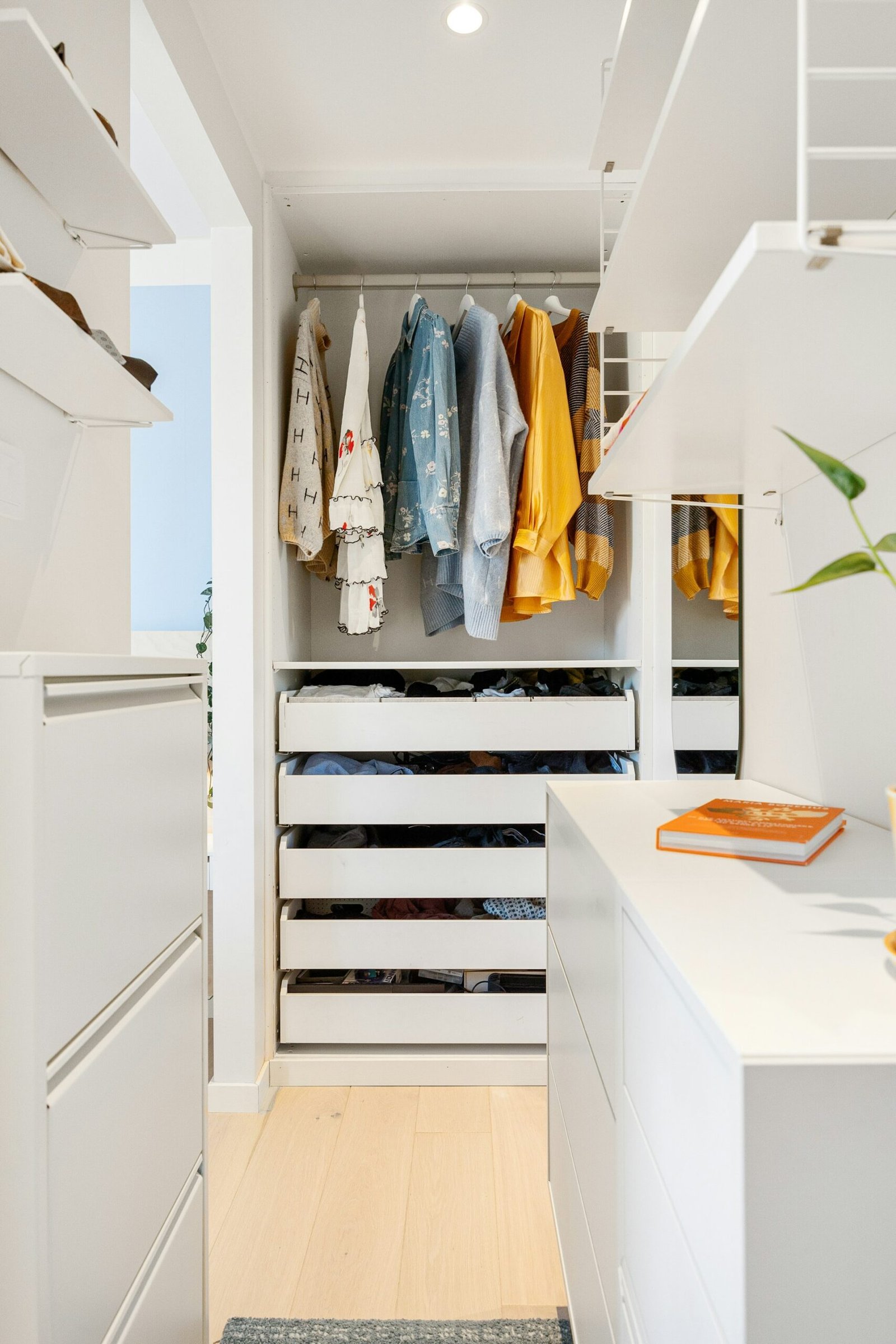
Table of Contents
- 1. Start by Decluttering Your Closet
- 2. Sort Clothes by How Often You Wear Them
- 3. Use Matching Hangers When Possible
- 4. Make Better Use of Vertical Space
- 5. Add Shelf Dividers
- 6. Use Storage Bins for Seasonal Clothes
- 7. Label Storage Bins Clearly
- 8. Use the Back of the Closet Door
- 9. Organize Shoes by Frequency of Use
- 10. Create a Small Accessories Zone
- 11. Keep Everyday Clothes Easy to Reach
- 12. Store Bulky Items Strategically
- 13. Leave Some Empty Space
- 14. Create a Simple Weekly Closet Reset
- 15. Build a Labeling System That Works Throughout Your Home
1. Start by Decluttering Your Closet
Before buying new organizers, start by looking at what is already in the closet.
Remove clothing and items that no longer fit, are rarely used, or belong somewhere else. Even removing a small amount can make the remaining storage space easier to manage.
A useful approach is to create three groups: keep, donate, and relocate. Items in the third group may simply need to be stored in another part of the home.
2. Sort Clothes by How Often You Wear Them
One of the simplest small closet organization ideas is to arrange clothing according to how frequently you use it.
Keep everyday clothing in the easiest-to-reach areas. Less frequently used clothing can go higher, farther back, or into seasonal storage.
This creates a closet that reflects your actual routine instead of simply grouping everything together.
3. Use Matching Hangers When Possible
Different types of hangers can take up different amounts of horizontal and vertical space. Using similar hangers can create a more consistent arrangement.

Thin hangers can also help maximize hanging space when the closet is especially narrow. More importantly, keeping similar items together makes it easier to see what you own.
4. Make Better Use of Vertical Space
When floor space is limited, look upward.
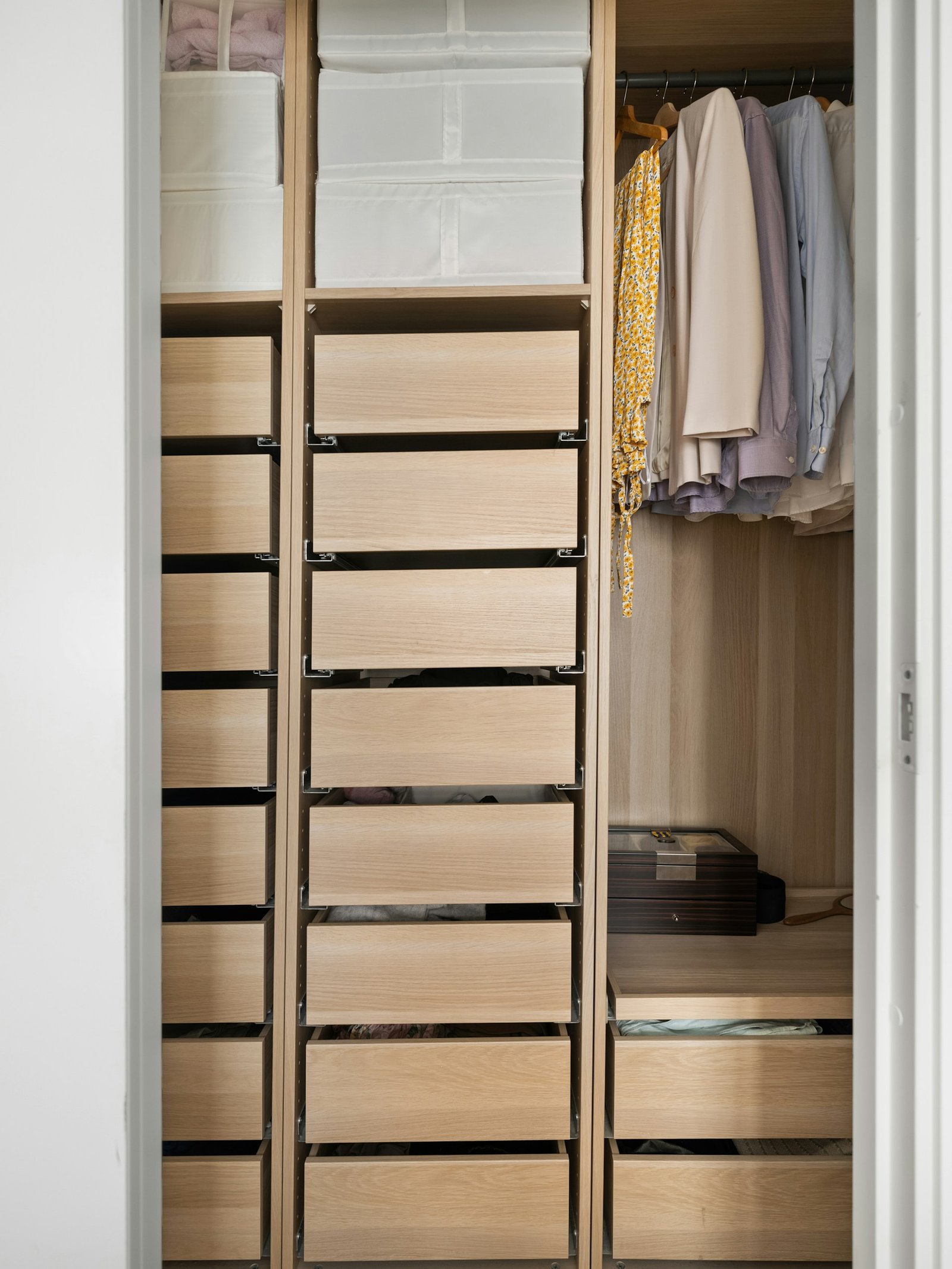
Upper shelves can hold seasonal clothing, extra bedding, bags, or other items that do not need to be accessed every day.
If your closet has unused vertical space, shelf risers, stackable bins, or additional shelving can help turn that empty area into useful storage.
5. Add Shelf Dividers
Open shelves can become messy when folded clothing and accessories are stacked together.
Shelf dividers can create separate sections for sweaters, jeans, bags, towels, or other categories. This is especially useful when several people share the same closet.
The goal is not to divide everything into tiny categories. Instead, create a few clear sections that make items easier to find and put away.
These small closet organization ideas can also make shared closets easier to use because each section has a clear purpose.
6. Use Storage Bins for Seasonal Clothes
Seasonal clothing does not need to occupy your most accessible closet space all year.

Consider placing winter accessories, summer clothing, or other seasonal items into storage bins when they are not needed.
Place these bins on higher shelves or in another suitable storage area. When the season changes, rotate the contents so the clothing you need is easier to reach.
7. Label Storage Bins Clearly
Storage bins become much more useful when you can identify their contents without opening each one.
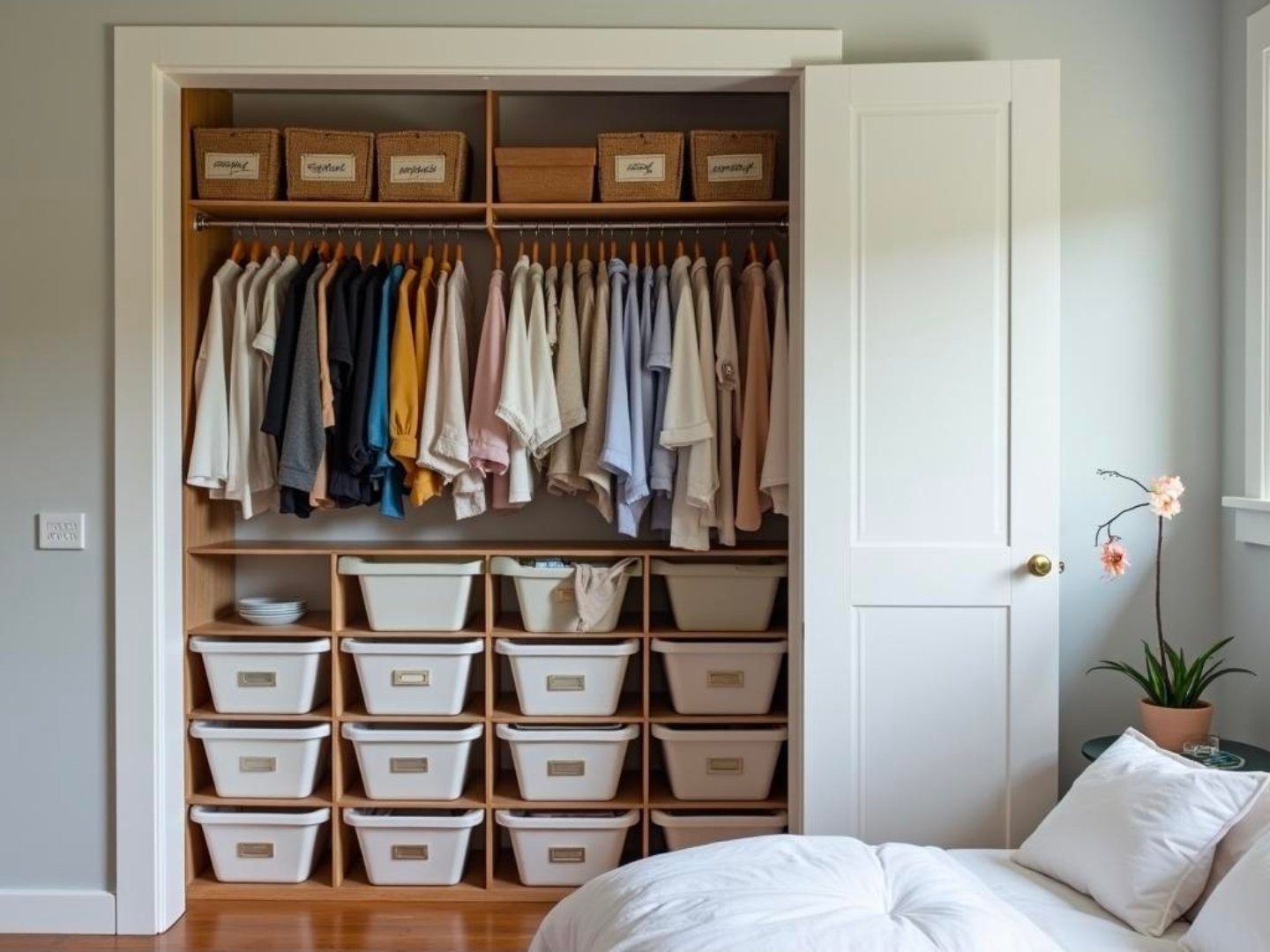
Simple labels such as “Winter Accessories,” “Summer Clothes,” “Bags,” or “Extra Linens” can make a noticeable difference.
If you use several bins, keeping the same labeling style throughout the closet makes the entire system easier to understand.
For a more consistent labeling system, you can also use a Bluetooth label maker for home organization to create labels for bins, shelves, and other storage areas.
8. Use the Back of the Closet Door
The back of a closet door is often overlooked storage space.
Depending on the door and available clearance, an over-the-door organizer can hold accessories, small bags, scarves, hats, or other lightweight items.
Keep frequently used items at eye level and avoid adding too much weight to the door. The goal is to gain useful storage without making the closet harder to open or close.
9. Organize Shoes by Frequency of Use
Shoes can quickly take over the bottom of a small closet.
Keep the shoes you wear most often in an easy-to-reach area. Less frequently used shoes can be stored higher up or in labeled boxes or containers.
Grouping shoes by type or frequency of use also makes it easier to find a pair without moving everything around.
10. Create a Small Accessories Zone
Small accessories are easy to lose when they are mixed together.
Create one dedicated area for items such as belts, scarves, hats, handbags, or small accessories. A few small containers or drawer dividers can keep these items separated.
Keeping accessories together also reduces the amount of time spent searching for small items before leaving the house.
11. Keep Everyday Clothes Easy to Reach
The most frequently used items should usually occupy the easiest-to-reach areas of the closet.
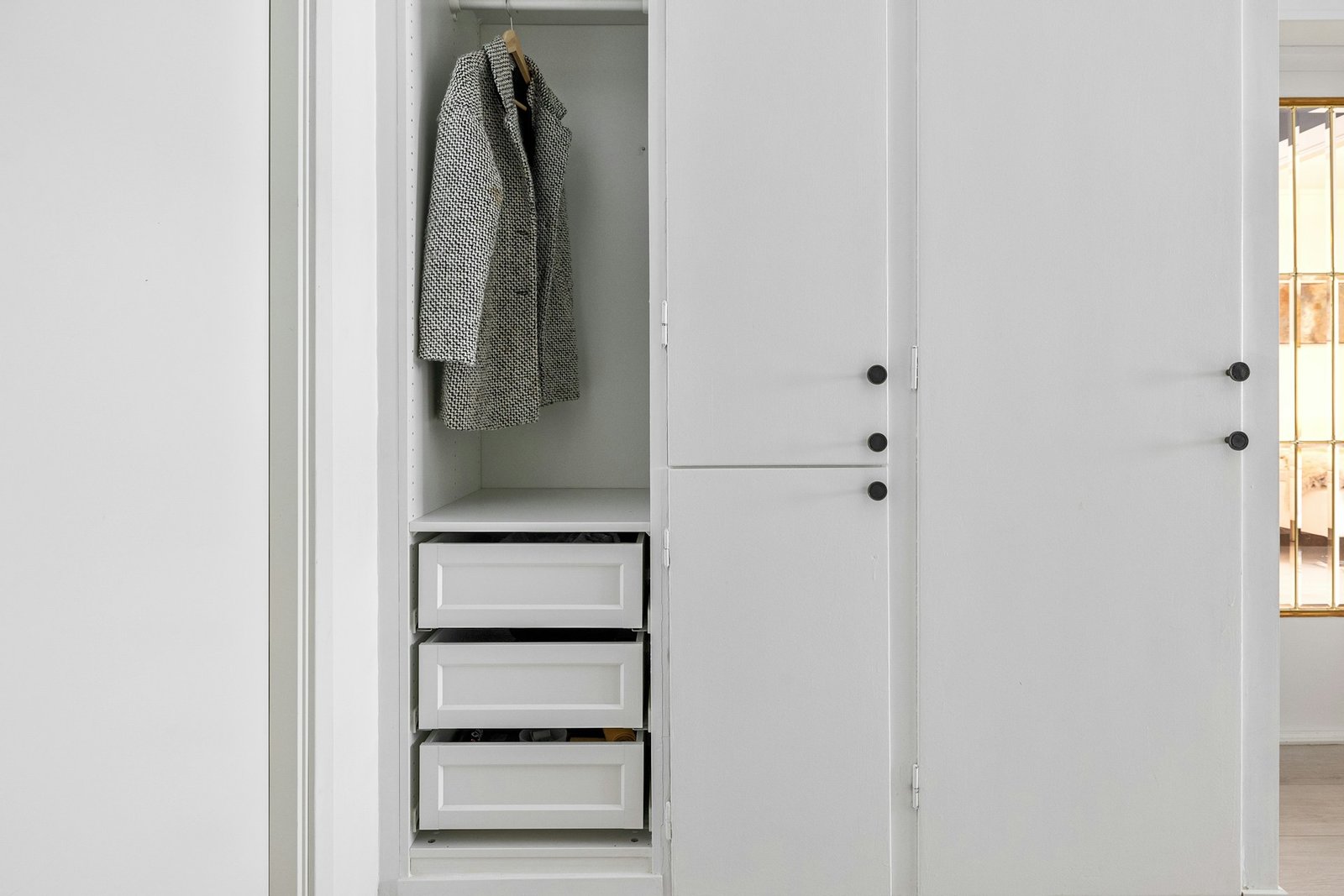
For example, everyday shirts, pants, or work clothes can stay at eye level, while rarely used items can move to upper shelves or storage bins.
This simple arrangement can make your daily routine faster while reducing unnecessary movement inside a small closet.
12. Store Bulky Items Strategically
Bulky sweaters, blankets, coats, and bags can consume a large amount of closet space.
Instead of spreading bulky items across multiple shelves, group them together and choose the storage location carefully.
Compression bags may work for some soft items, while structured storage bins can be useful for items that need more protection and easier stacking.
13. Leave Some Empty Space
A common mistake when organizing a small closet is trying to use every available inch.
Leaving a little empty space makes it easier to remove clothing, return items, and see what you actually have.
A closet that is completely full may technically contain more items, but it can become much harder to maintain.
14. Create a Simple Weekly Closet Reset
You do not need to reorganize your entire closet every week.
A short weekly reset can be enough. Return misplaced clothing, put shoes back in their designated area, straighten storage bins, and remove anything that does not belong in the closet.
Spending a few minutes on these small tasks can prevent clutter from building up again.
15. Build a Labeling System That Works Throughout Your Home
Once your closet is organized, consider using the same basic system in other areas of your home.
For example, you could use similar labels for closet bins, pantry containers, bathroom storage, home office supplies, and seasonal storage.
A consistent labeling system makes it easier for everyone in the household to know where things belong.
If you are building a broader home organization system, see our guide to the Bluetooth Label Maker for Home Organization.
Final Thoughts
When choosing small closet organization ideas, focus on changes that improve both storage capacity and everyday convenience.
Organizing a small closet does not have to mean buying a large collection of storage products. Start by removing items you no longer need, then make better use of vertical space, group similar items, and keep everyday clothing easy to reach.
The most effective small closet organization ideas are usually the ones that make your daily routine easier and simple enough to maintain.
Once your closet system works well, you can extend the same approach to other storage areas throughout your home.
Make Your Closet Organization Easier
Create clear, consistent labels for storage bins, shelves, and everyday items.
Check the Brother Label Maker on Amazon →
[…] you are also working on a small closet, see our guide to small closet organization ideas for additional ways to use bins, shelves, labels, and vertical […]
[…] you are also organizing a small closet or shared storage area, see our guide to small closet organization ideas for more ways to make better use of limited […]
[…] you are also organizing a small closet, see our guide to small closet organization ideas for ways to divide everyday and seasonal […]
[…] your closet also feels crowded, see our guide to small closet organization ideas for additional ways to separate everyday and less frequently used […]
[…] If storage space is already limited, you may also want to see our guide to small closet organization ideas. […]
[…] If you are also trying to make a small closet easier to manage, see our guide to small closet organization ideas. […]
[…] Small closet organization ideas for making better use of limited hanging and shelf space. […]