

Affiliate disclosure: This post contains affiliate links. As an Amazon Associate, NooklyGems may earn from qualifying purchases at no extra cost to you.
When the morning frost begins to settle on the rustic earthenware jars lined up in a traditional Korean courtyard, a familiar, deep scent begins to drift from the kitchen. It is a scent that carries the weight of history, the patience of changing seasons, and the quiet comfort of home. This is the world of Doenjang (된장)—Korea’s ancient fermented soybean paste.
In modern cooking, ingredients are often rushed, manufactured overnight, and packed with shortcuts. But true doenjang asks for something much more precious: time. Crafted slowly through the rhythm of sun, wind, and patient fermentation, doenjang is far more than a mere seasoning. It is the living soul of Korean comfort food, holding memories of bubbling stews shared around low wooden tables on chilly winter nights.
Quick Answer: What Is Doenjang?
Doenjang is a traditional Korean fermented soybean paste with a deep, savory, salty, and earthy flavor. It is commonly used in doenjang jjigae (soybean paste stew), soups, sauces, vegetable dips, and marinades. Although it is often compared with Japanese miso, the two pastes differ in ingredients, fermentation methods, texture, and flavor, meaning they are not always directly interchangeable.
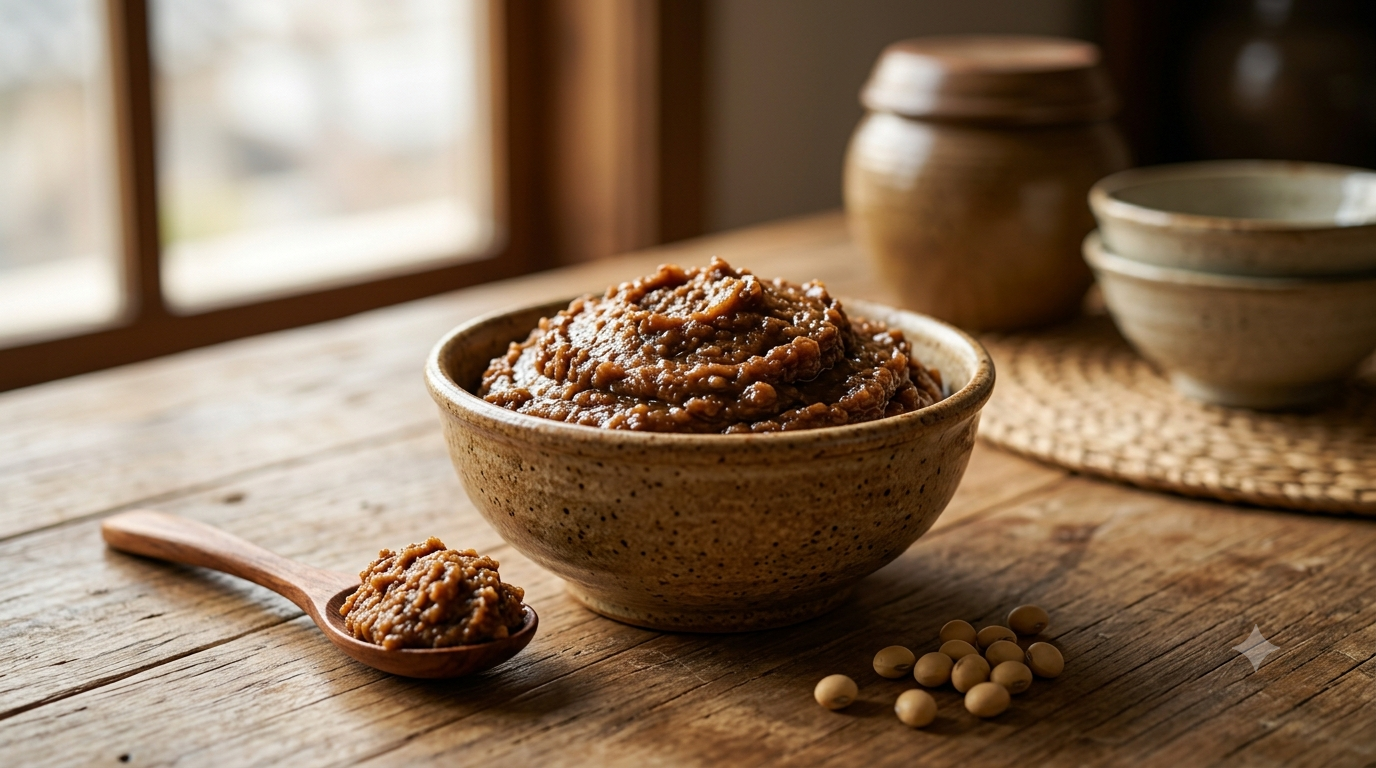
The Living Heritage: How Doenjang Comes to Life
Long before supermarkets and automated factories existed, Korean families practiced an art form rooted in nature. The creation of traditional doenjang is a generational ritual centered around meju (fermented soybean blocks).
It begins with simple, humble ingredients: soybeans, water, and salt. But under the watchful eye of nature, a quiet transformation takes place:
- The Harvest and Boil: Plump soybeans are carefully selected, soaked overnight, and gently simmered for hours until they become tender and buttery.
- Shaping the Meju: The cooked beans are pounded by hand and shaped into dense rectangular blocks, capturing beneficial wild microorganisms from the environment.
- Drying and Sun-Curing: These blocks are hung or laid out in the crisp breeze to dry, slowly curing under the changing skies.
- The Earthenware Aging: In early spring, the blocks are submerged in brine inside large clay jars known as onggi. As the months pass, the liquid separates into traditional soy sauce (ganjang), while the thick, nutrient-dense mash matures into deep, complex doenjang.
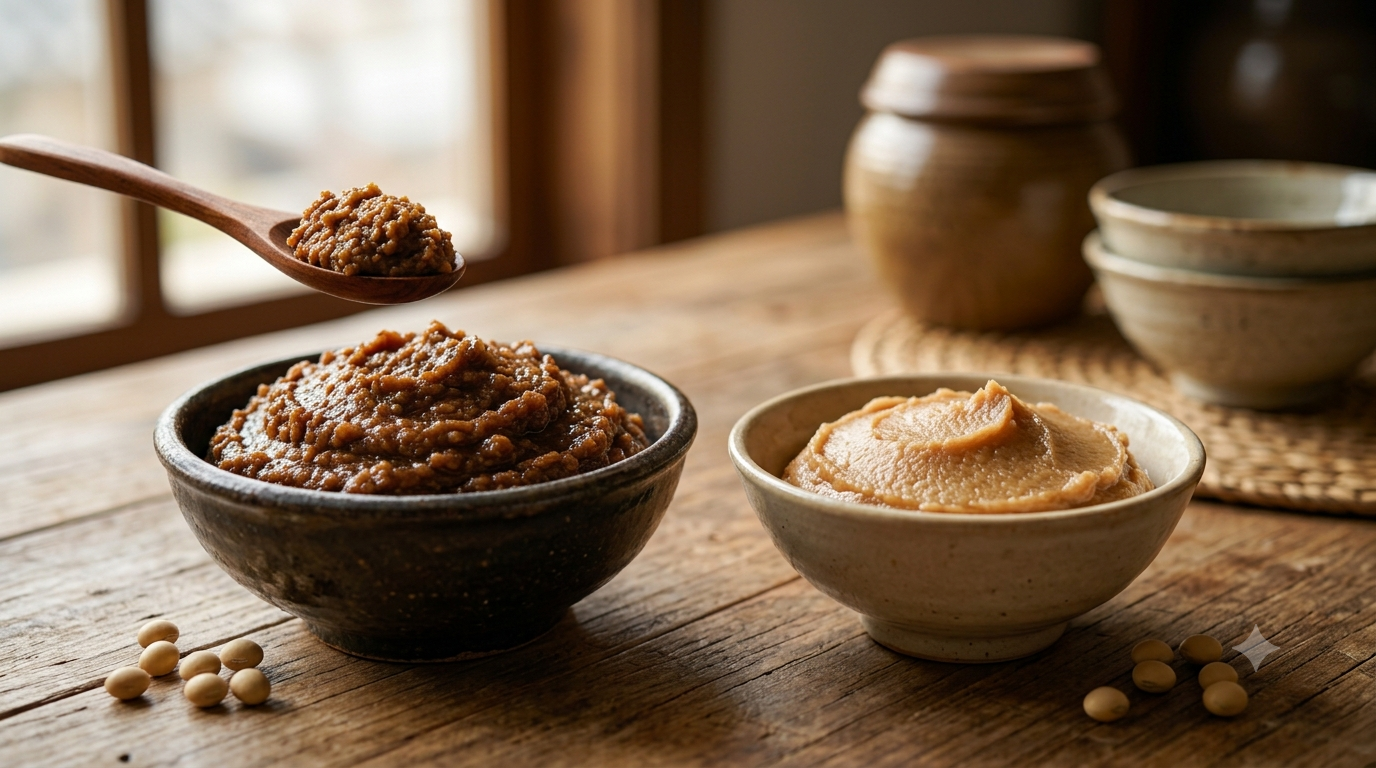
Doenjang vs. Japanese Miso: Understanding the Differences
Because both are pillars of Asian fermented cuisine, people often ask if doenjang and Japanese miso are the same thing. While they share an ancient lineage, their personalities in the kitchen are wonderfully distinct:
| Feature | Korean Doenjang | Japanese Miso |
|---|---|---|
| Fermentation & Style | Rustic, unpasteurized, relying purely on soybeans, salt, and wild aging | Often incorporates grains like rice or barley (koji) for a controlled fermentation |
| Flavor Profile | Deeply earthy, robust, savory, and complex with a rustic edge | Generally milder, sweeter, and more delicate on the palate |
| Texture | Coarse and thick, featuring visible, satisfying soybean pieces | Smooth, silky, and uniform paste |
| Common Uses | Korean stews (jjigae), savory vegetable side dishes, and rich BBQ dipping sauces | Miso soup, delicate glazes, and light marinades |
Can you substitute miso for doenjang? Yes, in some flexible recipes. However, keep in mind that miso is much lighter and sweeter. You may want to add a pinch of salt or adjust your proportions to capture the robust, earthy punch that makes doenjang unique.
If you are exploring Korean condiments, be sure to read our guide on how to use gochujang to see how red pepper paste differs from soybean paste.
4 Easy Ways to Use Doenjang in Your Kitchen
Because doenjang carries concentrated umami depth, a single spoonful transforms an ordinary meal into something extraordinary. Here is how to use it in everyday cooking:
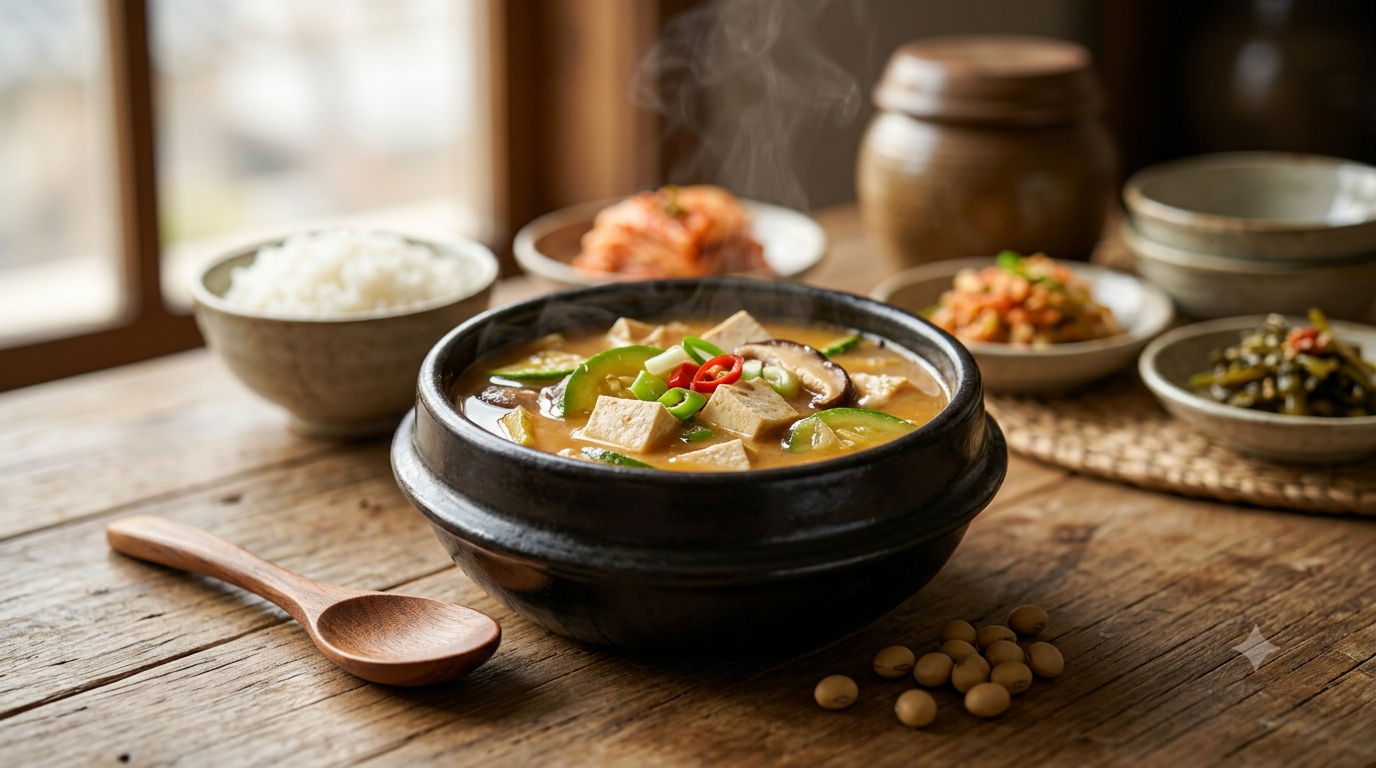
1. Make Doenjang Jjigae (Soybean Paste Stew)
Doenjang jjigae is a classic comforting stew made with tofu, zucchini, onions, garlic, and mushrooms. As it simmers, it fills the home with an irresistible grounding aroma.
Easy starting ratio: Dissolve 1 tablespoon of doenjang in about 2 cups of broth or water. Add your vegetables and tofu, simmer until tender, and taste before adding more paste.
2. Make a Quick Doenjang Marinade
Doenjang’s natural enzymes tenderize and infuse deep flavor into meats and vegetables.
Mix these ingredients:
- 1 tablespoon doenjang
- 1 tablespoon water
- 1 teaspoon sesame oil
- 1 teaspoon honey or sugar
- 1 small garlic clove, minced
Coat meat or vegetables lightly, keep refrigerated while marinating, and cook thoroughly.
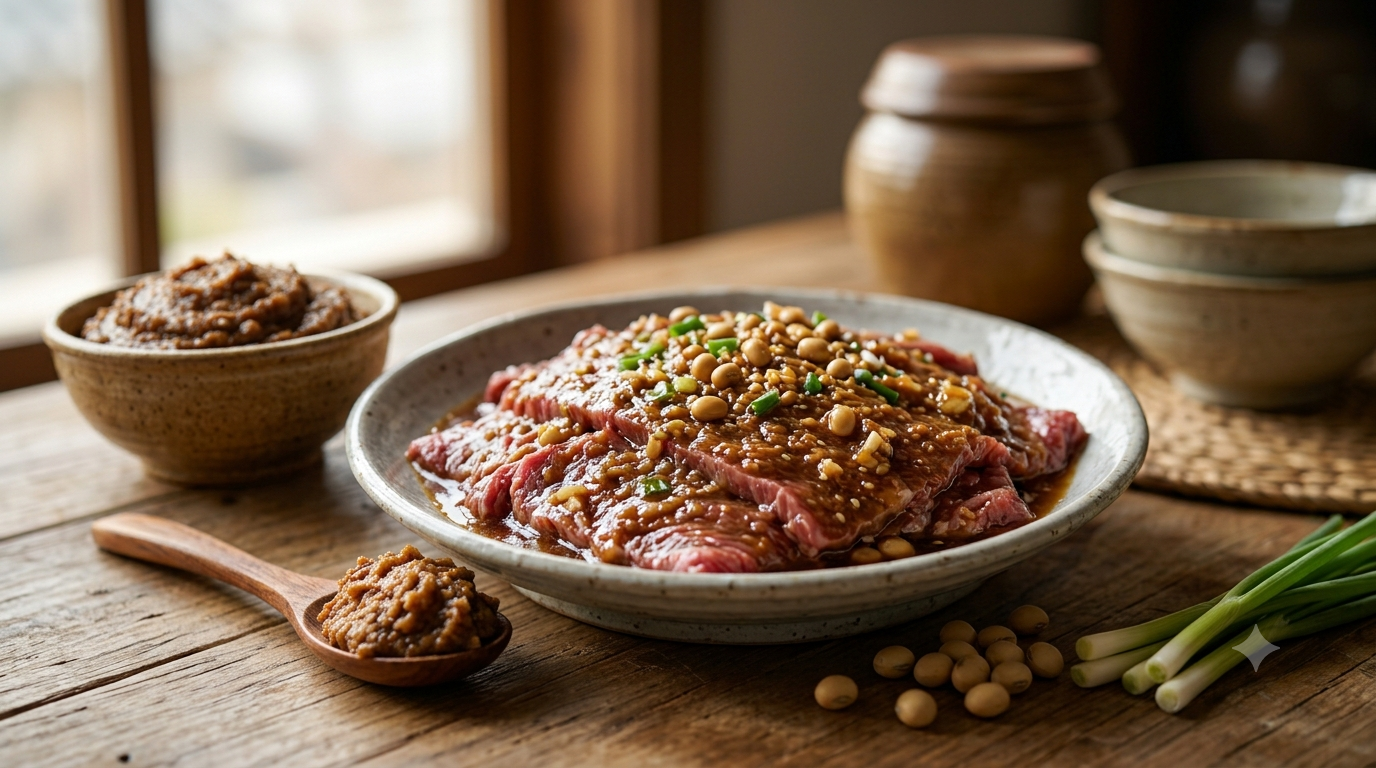
3. Make a Simple Vegetable Dip (Ssamjang Style)
In Korea, raw or crunchy vegetables are traditionally served with a savory dipping sauce.
Mix together: 1 tablespoon doenjang, 1 teaspoon sesame oil, 1 small minced garlic clove, sesame seeds, and a touch of honey if desired. Serve with cucumber, carrot, or bell pepper sticks.
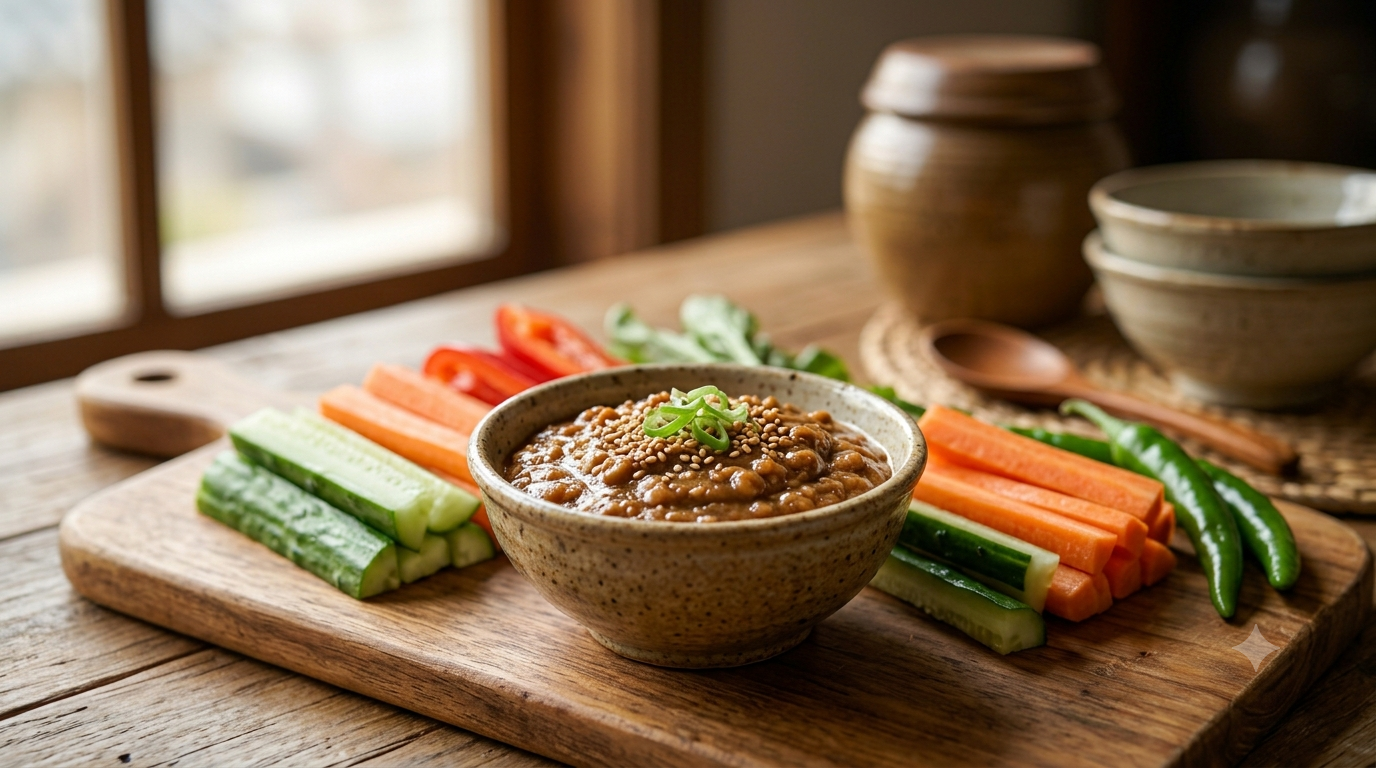
4. Enhance Soups and Sautéed Greens
Stir a small spoonful into vegetable soup, mushroom broth, or blanched greens for instant umami depth.
Sempio Doenjang Vegan Original Soybean Paste
16.2 oz / 460 g
Traditional Korean Soybean Paste, Savory & Sweet Fermented Condiment for Soups, Jjigae, Marinades, Preservative Free.
Korean Buncheong Mud Glaze Ttukbaegi
27 oz / 800 ml
Ceramic Clay Cooking Pot Casserole, Heat Resistant Earthen Pot, Stone Bowl Stockpot Soup Cookware, Pottery Bowl.
How to Use Doenjang Without Making Food Too Salty
One common challenge for first-time users is adding too much paste. Doenjang is concentrated, and salt levels vary by brand. Keep these practical tips in mind:
- Start small: Add less than you think you need when testing an unfamiliar brand.
- Give it time: Stir it into broth and let flavors meld before adjusting.
- Check other ingredients: Soy sauce or stock cubes will add extra sodium.
- Rebalance easily: If a stew is too salty, add more water, unsalted broth, vegetables, or tofu.
If you are building out your pantry, check our guide to Korean pantry essentials.
Caring for Your Doenjang: Storage Wisdom
Because true doenjang is a live fermented product, proper storage keeps it fresh:
- Keep it Cool: Always store opened doenjang in the refrigerator. Its natural salt content acts as a preservative over time.
- Use Clean Tools: Always scoop with a clean, dry spoon to prevent moisture and mold contamination.
Frequently Asked Questions About Doenjang
Is doenjang gluten-free?
Traditional artisan doenjang is crafted using only soybeans, salt, and water, making it naturally gluten-free. However, because some commercial brands introduce wheat during processing, always check the ingredient label if you have a gluten sensitivity.
Can I use miso as a substitute for doenjang?
In an emergency, yes, but keep in mind that miso is much lighter and sweeter. Adjust your proportions or add a pinch of salt to match doenjang’s robust profile.
Is doenjang spicy?
Not at all! Doenjang contains no chili peppers or heat. Its warmth comes entirely from the savory umami of fermented soybeans.
Do I need an earthenware pot (ttukbaegi) to cook doenjang jjigae?
While a ttukbaegi provides authentic presentation and heat retention, it is optional. You can easily prepare doenjang jjigae in any standard saucepan.
Does doenjang need to be refrigerated after opening?
Yes, refrigeration is recommended for most commercial doenjang products after opening. Always follow the specific instructions on your product label.
A Final Thought on Slow Food
In a world that moves too fast, opening a jar of doenjang is a gentle reminder to slow down. It connects us to centuries of heritage, quiet farmyards, and the simple beauty of ingredients crafted with patience and care.
Ready to continue your culinary journey? Explore our guides on Gochugaru vs. Red Pepper Flakes to bring even more warmth and flavor to your home kitchen!