

As an Amazon Associate, I earn from qualifying purchases.
Walking into an Asian market—or scrolling through Amazon—can feel overwhelming when you are looking for the right Korean pantry essentials to start cooking authentic meals at home. With dozens of sauces, pastes, and mysterious spices, where do you actually begin without wasting money?
Here is the good news: you don’t need a full pantry revamp to make delicious Korean dishes. A small set of versatile Korean pantry essentials can help you prepare many Korean favorites, including Bulgogi, Tteokbokki, and Bibimbap. Below are 12 useful ingredients for beginners, along with product options to help you get started.
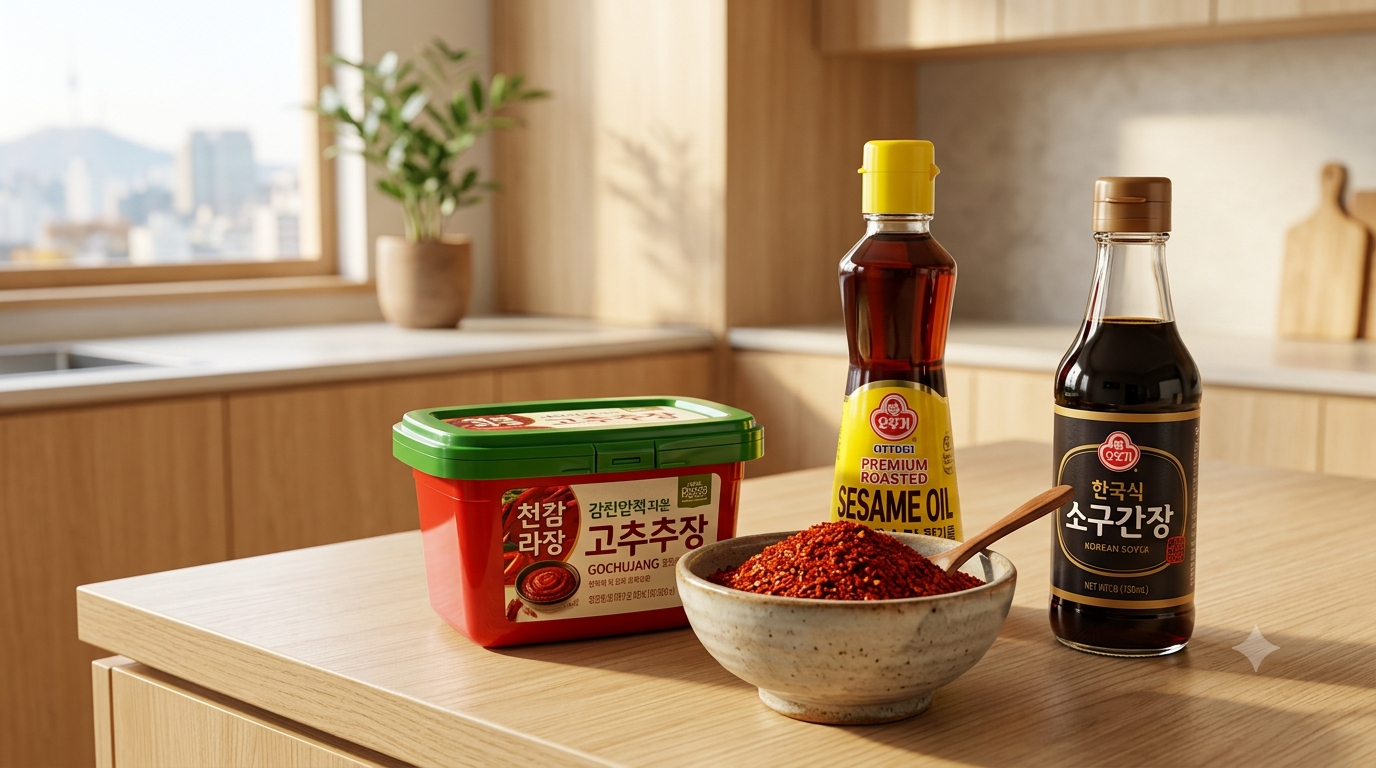
💡 Beginner Shortcut: What to Buy First?
If you are on a budget or limited on pantry space, start with Gochujang (Chili Paste), Jin Ganjang (Soy Sauce), and Roasted Sesame Oil from your list of Korean pantry essentials. These three create the iconic sweet, savory, and nutty foundation of Korean cuisine!
12 Must-Have Korean Pantry Essentials for Beginners
1. Gochujang (Korean Red Chili Paste)
Gochujang is the undisputed backbone of Korean savory-spicy dishes. Unlike standard hot sauce that relies heavily on vinegar, Gochujang is a fermented paste made from red chili powder, glutinous rice, and fermented soybeans. It offers a rich, complex balance of heat, subtle sweetness, and deep umami.
Best Used For: Tteokbokki (spicy rice cakes), Bibimbap sauce, spicy pork marinades, and dipping sauces.
Need authentic flavor without extreme heat?
Check taste profile, heat levels, and container sizes to find the perfect Gochujang for your kitchen.
2. Gochugaru (Korean Red Pepper Flakes)
Never substitute crushed red pepper flakes from your local pizza place for Gochugaru! Korean pepper flakes are sun-dried, seedless flakes that deliver a vibrant red color, smokey-sweet flavor, and a smooth, gentle heat without overwhelming your palate.
Best Used For: Homemade Kimchi, spicy soups (Kimchi Jjigae), stews, and fresh Korean side salads (Geotjeori).
Looking for vibrant color & gentle kick?
Compare grind sizes and check reviews for coarse vs. fine Gochugaru before ordering.
3. Roasted Sesame Oil (Chamgireum)
Korean toasted sesame oil is cold-pressed from intensely roasted sesame seeds, yielding a dark amber hue and a powerful nutty aroma. It is primarily used as a finishing oil rather than a cooking oil to preserve its rich aromatic properties.
Best Used For: Drizzling over Bibimbap, seasoning vegetable side dishes (Namul), and crafting dipping sauces for grilled meat.
Want that unmistakable nutty aroma?
Explore top-rated Korean sesame oils and see why 100% pure roasted oil makes a huge difference.
4. Doenjang (Fermented Soybean Paste)
Often compared to Japanese miso, Doenjang is fermented longer and has a bolder, saltier, and more complex earthy depth. While miso is sweet and mild, Doenjang provides a robust flavor that can withstand long boiling times without losing its character.
Best Used For: Doenjang Jjigae (soybean paste stew), Ssamjang (K-BBQ wrap sauce), and rich vegetable marinades.
Ready to brew rich, savory Korean stews?
Check traditional Doenjang paste options and authentic customer reviews on Amazon.
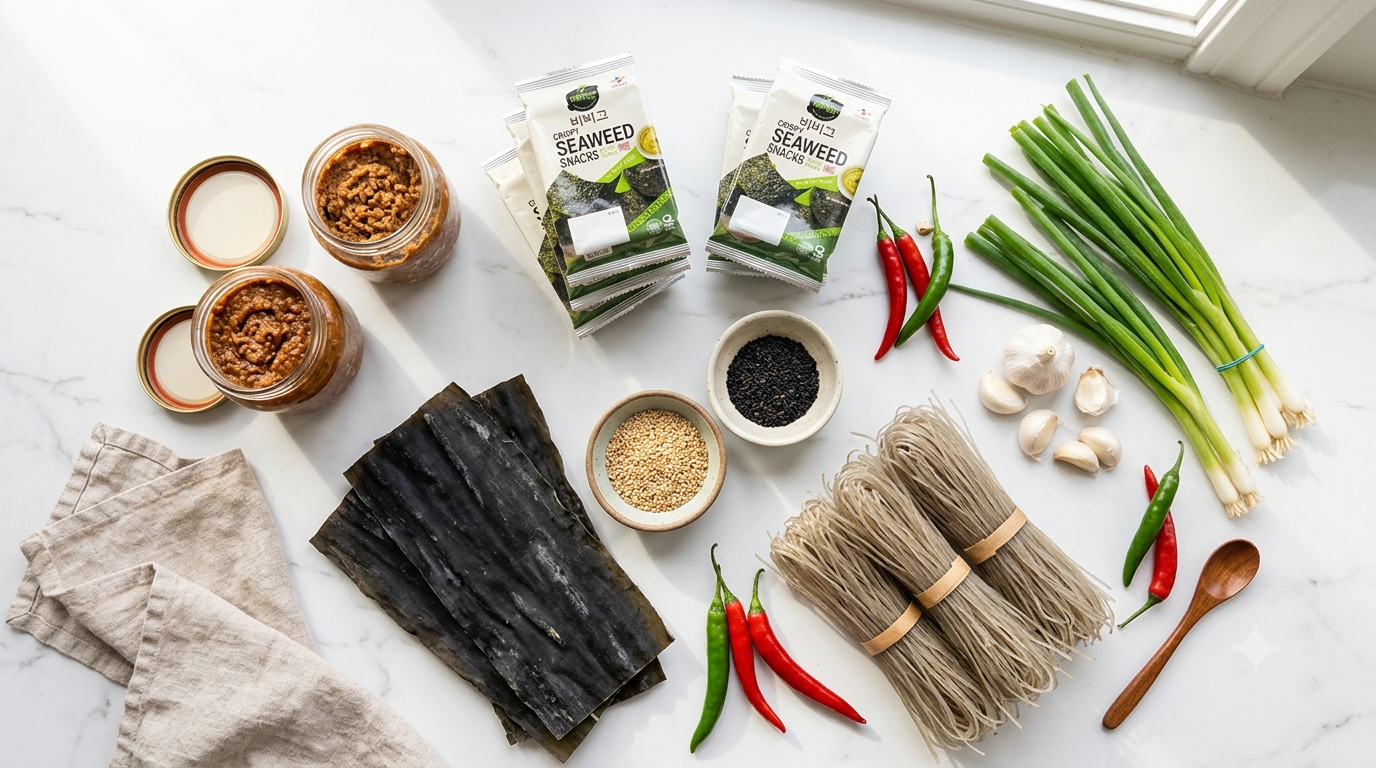
5 & 6. Korean Roasted Seaweed (Gim / Nori)
Korean Seaweed (Gim) is roasted with sesame oil and salt, making it light, crispy, and savory. Depending on how you intend to use it, you will want either individual snack packs or large full sheets.
• Daily Snack Packs: Perfect for healthy low-calorie snacking or wrapping bite-sized spoonfuls of warm rice.
• Full-Sized Cooking Sheets: Ideal for making homemade Kimbap, rice rolls, or cutting into custom strips for garnishing soups.
7–12. Other Essential Pantry Fillers
- 7. Jin Ganjang (Korean Soy Sauce): A naturally brewed dark soy sauce with a balanced flavor, essential for stir-fries, marinades (Bulgogi), and braised dishes.
- 8. Fish Sauce (Aekjeot): Extracted from anchovies or sand lance, a few drops add an irresistible savory umami lift to Kimchi and stews without smelling fishy once cooked.
- 9. Dangmyeon (Glass Noodles): Made from 100% sweet potato starch, these chewy, gluten-free translucent noodles are the main star of Japchae.
- 10. Mirim (Cooking Wine): Adds a touch of natural sweetness while eliminating unwanted gamey odors from meats and seafood.
- 11. Dried Kelp & Anchovies (Dashima & Myeolchi): The fundamental combo for making traditional Korean broth—the liquid gold behind almost every soup.
- 12. Rice Syrup (Ssal-Yeot): Gives Korean glazed dishes like sweet soy chicken their glossy sheen and mild, pleasant sweetness.
Explore More Beginner Korean Cooking Guides:
- 👉 What Is Gochujang? How to Use Korean Chili Paste in Everyday Meals (guide coming soon)
- 👉 Gim vs. Nori: What Is the Difference Between Korean and Japanese Seaweed? (guide coming soon)
- 👉 Gochugaru vs. Red Pepper Flakes: Can You Swap Them? (guide coming soon)
“`[cite: 5]