

This post contains affiliate links. As an Amazon Associate, I earn from qualifying purchases at no extra cost to you.
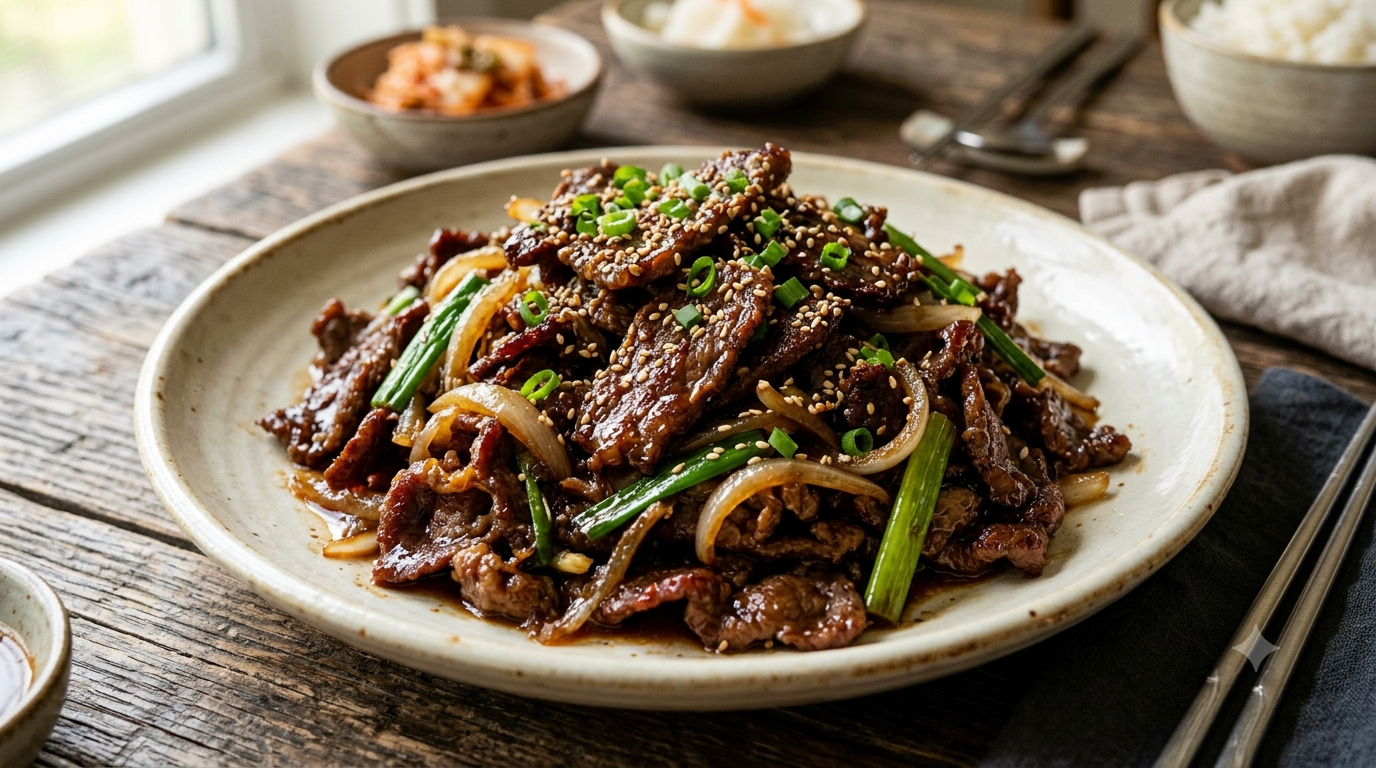
Some of the best family dinners begin with a simple plan: cook something delicious, put a few dishes on the table, and let everyone gather around. Korean bulgogi is perfect for those evenings. As thin slices of beef sizzle in a sweet and savory marinade, the kitchen fills with the aroma of garlic, soy sauce, and toasted sesame oil. Before long, everyone is asking when dinner will be ready.
Bulgogi is one of Korea’s most beloved beef dishes, and you don’t need a Korean restaurant or special equipment to make it at home. With thinly sliced beef, a balanced marinade, and a few simple techniques, you can create a satisfying meal for the whole family.
What Is Korean Bulgogi?
The Korean word bulgogi combines bul, meaning fire, and gogi, meaning meat. Traditionally, it refers to marinated meat cooked over fire. Today, home cooks can make delicious bulgogi in a skillet, on a grill, or with a Korean tabletop grill.
Unlike spicy Korean dishes, beef bulgogi is usually savory, slightly sweet, and rich in garlic and sesame flavor. Serve it with steamed rice, lettuce leaves, kimchi, and other Korean side dishes for a meal everyone can customize.
Best Beef for Homemade Bulgogi
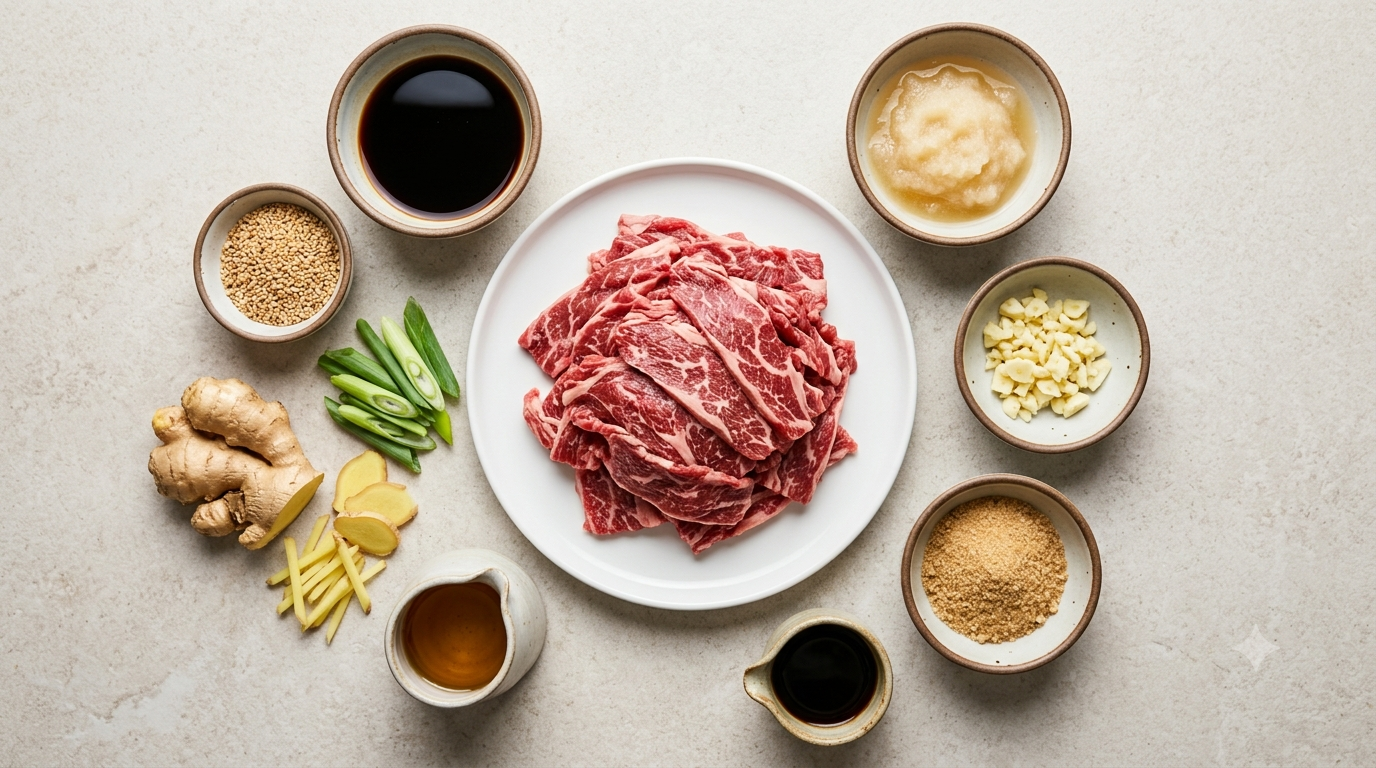
The secret to tender bulgogi starts with choosing the right cut and slicing it thinly.
- Ribeye: Rich marbling makes it juicy and flavorful. A great choice for a special family dinner.
- Top sirloin: Leaner than ribeye but still tender when thinly sliced and cooked quickly.
- Beef chuck: An affordable option with good flavor. Choose a suitable tender cut and slice it very thinly across the grain.
If your grocery store carries pre-sliced beef for Korean BBQ or hot pot, it can save time. Otherwise, place the beef in the freezer for about 30–60 minutes, until firm but not frozen solid. This makes thin slicing much easier. Aim for slices about 1/8 inch thick.
Easy Korean Bulgogi Recipe
Prep time: 15 minutes
Marinating time: 30 minutes to 2 hours
Cook time: 10–15 minutes in batches
Servings: 4
Ingredients
- 1.5 lb thinly sliced beef ribeye or top sirloin
- 1/4 cup Korean soy sauce
- 1–2 tablespoons brown sugar, adjusted to taste
- 1/4 cup grated Asian pear or apple
- 3 garlic cloves, minced
- 1 tablespoon grated fresh ginger, optional
- 2 green onions, thinly sliced
- 1 tablespoon toasted sesame oil
- 1/2 teaspoon black pepper
- 1 tablespoon neutral cooking oil
- 1 teaspoon sesame seeds, optional
Step 1: Make the Marinade
In a bowl, combine the soy sauce, brown sugar, grated pear or apple, garlic, ginger, green onions, sesame oil, and black pepper. Stir until the sugar dissolves.
Step 2: Marinate the Beef
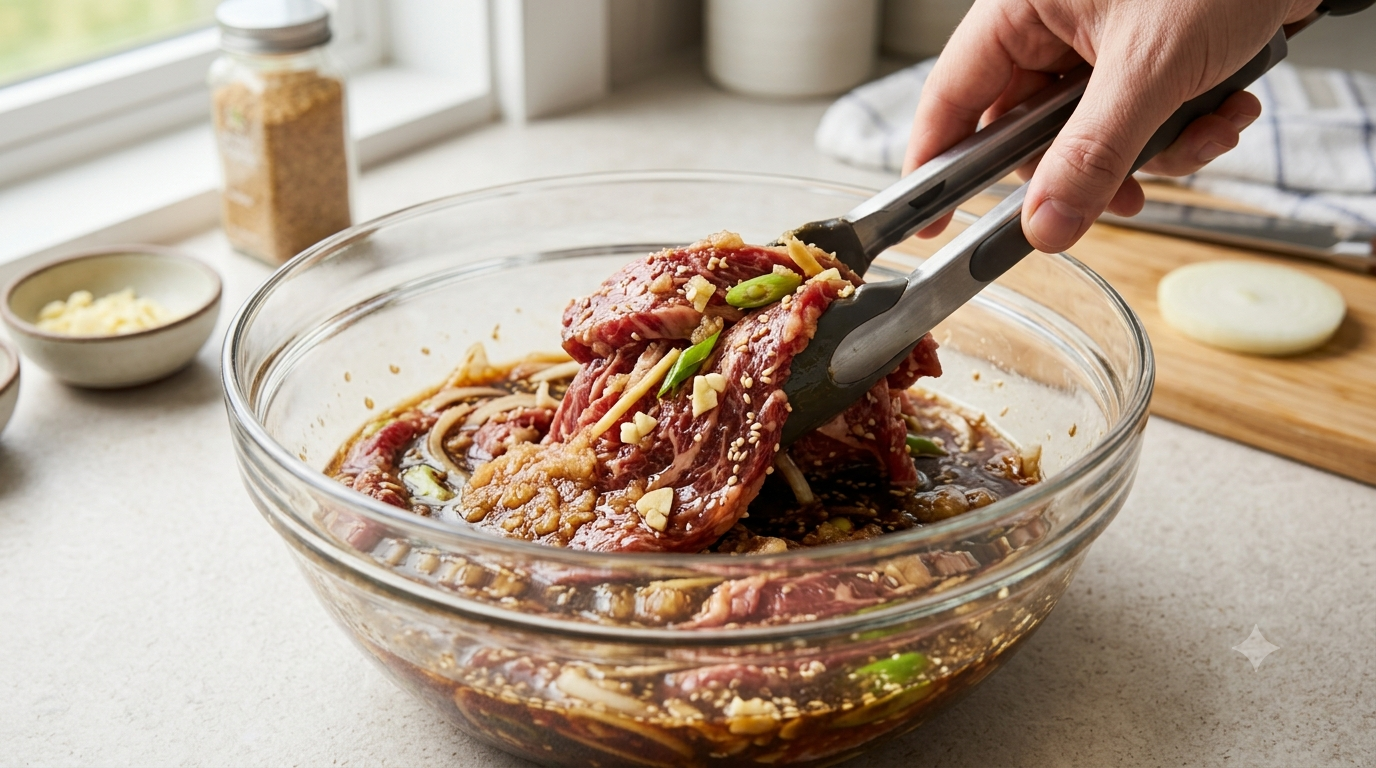
Add the beef and gently mix until every slice is coated. Cover and refrigerate for 30 minutes to 2 hours. Keep the beef refrigerated while it marinates. Avoid leaving the meat in fruit-based marinade for an extended period (more than 4 hours), as the natural enzymes can break down the muscle fibers and change the texture too much.
Step 3: Cook Over High Heat
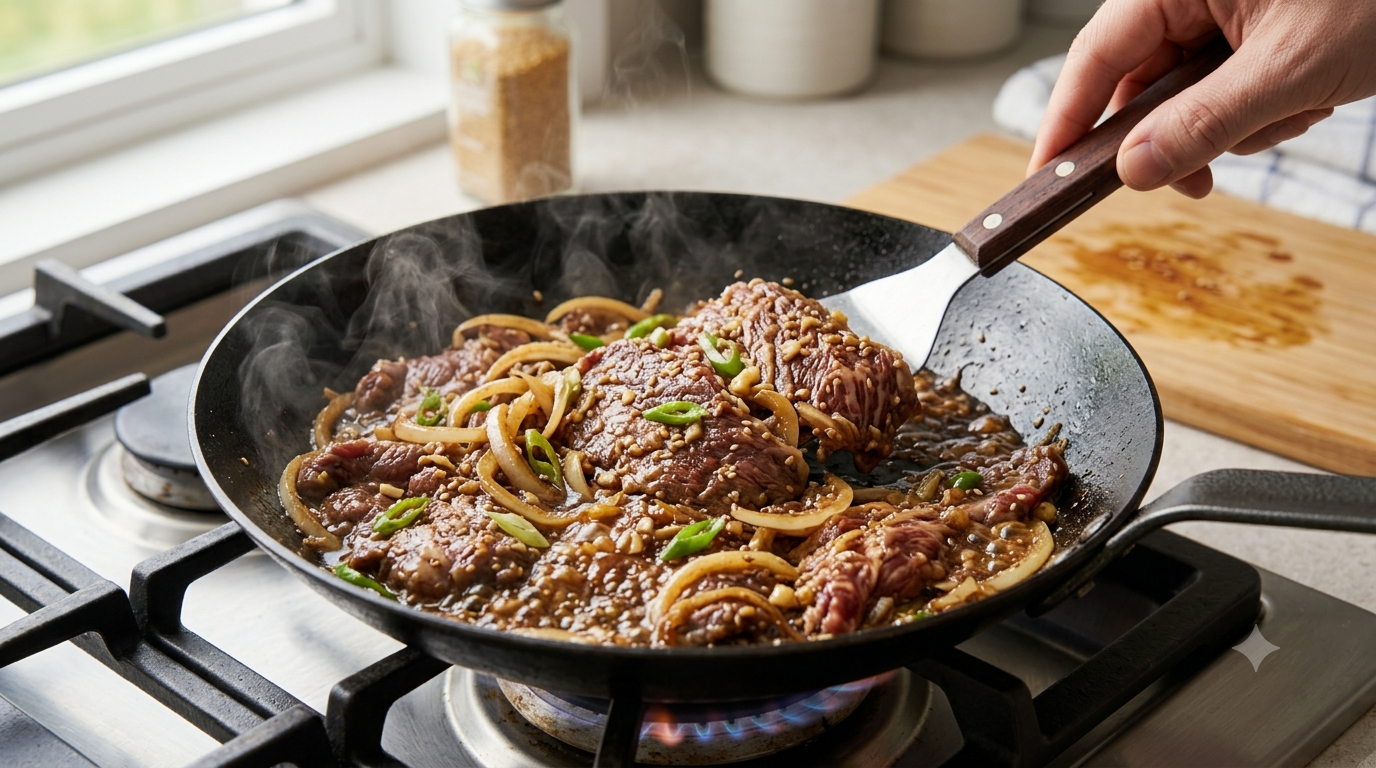
Heat a large skillet until hot, then add the neutral cooking oil. Cook the beef in small batches, spreading the slices into a single layer. Let the meat brown before tossing it. Overcrowding the pan traps moisture and can make the beef steam instead of caramelize.
Because the slices are very thin, it cooks in just 2 to 3 minutes per batch. Sprinkle with sesame seeds and additional green onions if desired.
Step 4: Bring Everyone to the Table
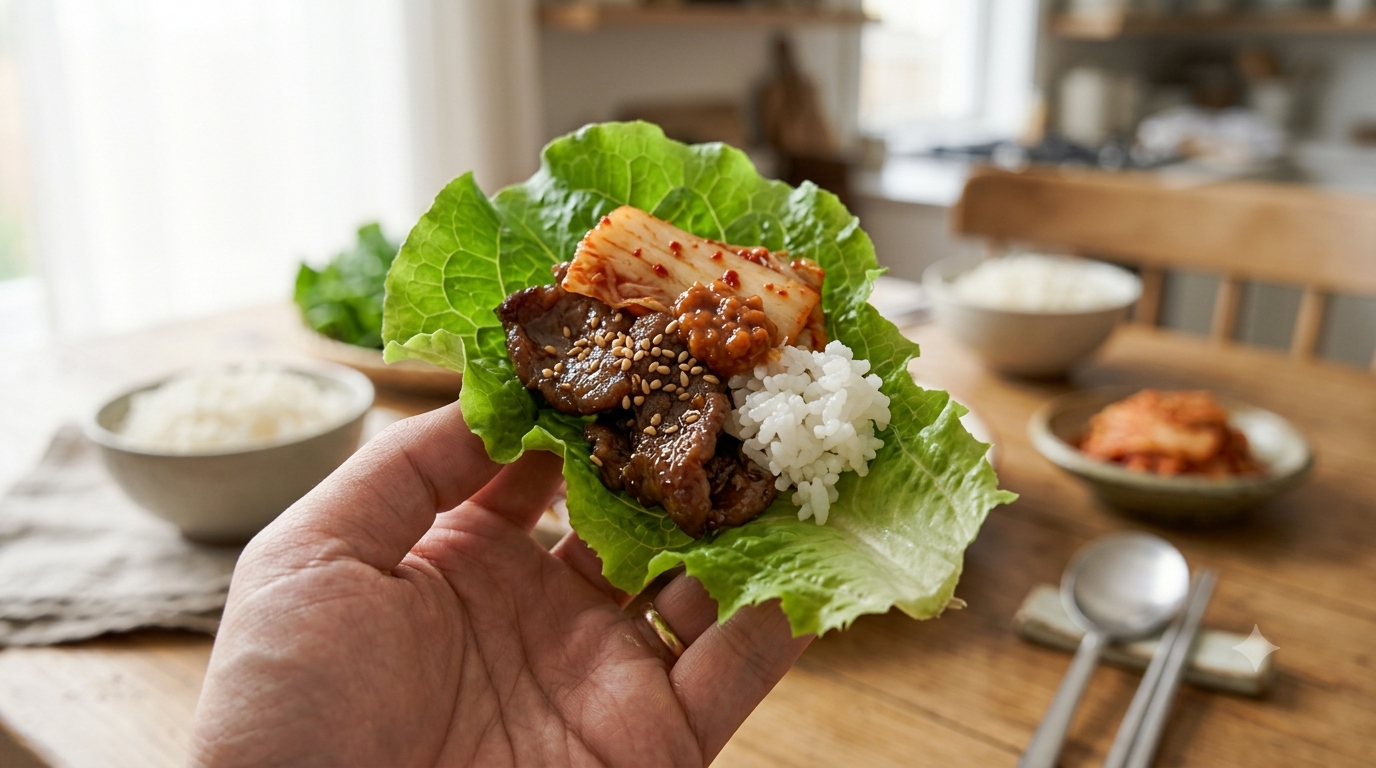
Serve the bulgogi hot with rice, lettuce leaves, kimchi, and sliced cucumbers. For Korean-style lettuce wraps, add a little rice and beef to a lettuce leaf, then finish with ssamjang if you enjoy a deeper, savory flavor.
Small Details That Make Bulgogi Better
- For tender beef: Slice thinly across the grain and avoid overcooking.
- For better browning: Cook in batches instead of filling the pan completely.
- If the marinade tastes too salty: Serve with plain rice and unsalted vegetables rather than adding more soy sauce.
- If you cannot find Asian pear: Use a small amount of grated apple. It adds mild sweetness without requiring a specialty grocery trip.
- For a less sweet version: Start with one tablespoon of brown sugar and adjust after your first batch.
Helpful Ingredients for a Korean BBQ Night
You can make bulgogi with everyday kitchen equipment, but a few pantry staples can make Korean meals easier to prepare regularly.
Sempio Premium Soy Sauce: Jin Gold F3, 29.08 fl oz / 860mL
Rich & Savory Flavor Enhancer, Authentic Korean Asian Cuisine, Ideal for Stir-fries, Made in Korea, Kosher, Vegan, Non-GMO.
CJ Premium Sesame Oil Beksul Original
Brown, 10.8 fl oz (320 ml). A little toasted sesame oil adds a nutty aroma to bulgogi and works well in rice bowls, vegetable side dishes, and Korean dipping sauces.
TECHEF – Stovetop Korean BBQ Non-Stick Grill Pan with Agni Portable Gas Stove Burner
Made in Korea (Grill Pan w Stove). If your family enjoys cooking together at the table, a tabletop grill can make dinner more interactive. A skillet works perfectly well if you prefer a simpler setup.
How to Store and Reheat Leftover Bulgogi
Let leftover bulgogi cool promptly, then refrigerate it in an airtight container within two hours of cooking. Use refrigerated leftovers within 3–4 days. Reheat thoroughly to 165°F (74°C), adding a small splash of water if needed to keep the beef moist. You can also freeze uncooked marinated beef in a freezer-safe bag for convenient future meals.
Frequently Asked Questions
Why did my bulgogi turn out tough?
The beef may have been sliced too thickly, cut with the grain, or overcooked. Choose a suitable cut, slice thinly across the grain, and cook quickly in batches over high heat.
Can I prepare bulgogi the day before?
Yes. You can mix the marinade ahead and refrigerate it separately. For the best texture, especially when using grated fruit, combine it with the beef closer to cooking time rather than leaving the meat in the marinade overnight.
Can I make bulgogi without Asian pear?
Yes. Grated apple is a convenient substitute, and you can also omit the fruit. The beef will still taste delicious if the marinade is well balanced and the meat is sliced thinly.
What should I serve with Korean bulgogi?
Steamed rice, lettuce wraps, kimchi, cucumber salad, and roasted Korean seaweed make easy accompaniments. For more Korean pantry ideas, read our Korean Pantry Essentials guide.
Make Bulgogi Part of Your Family Dinner Tradition
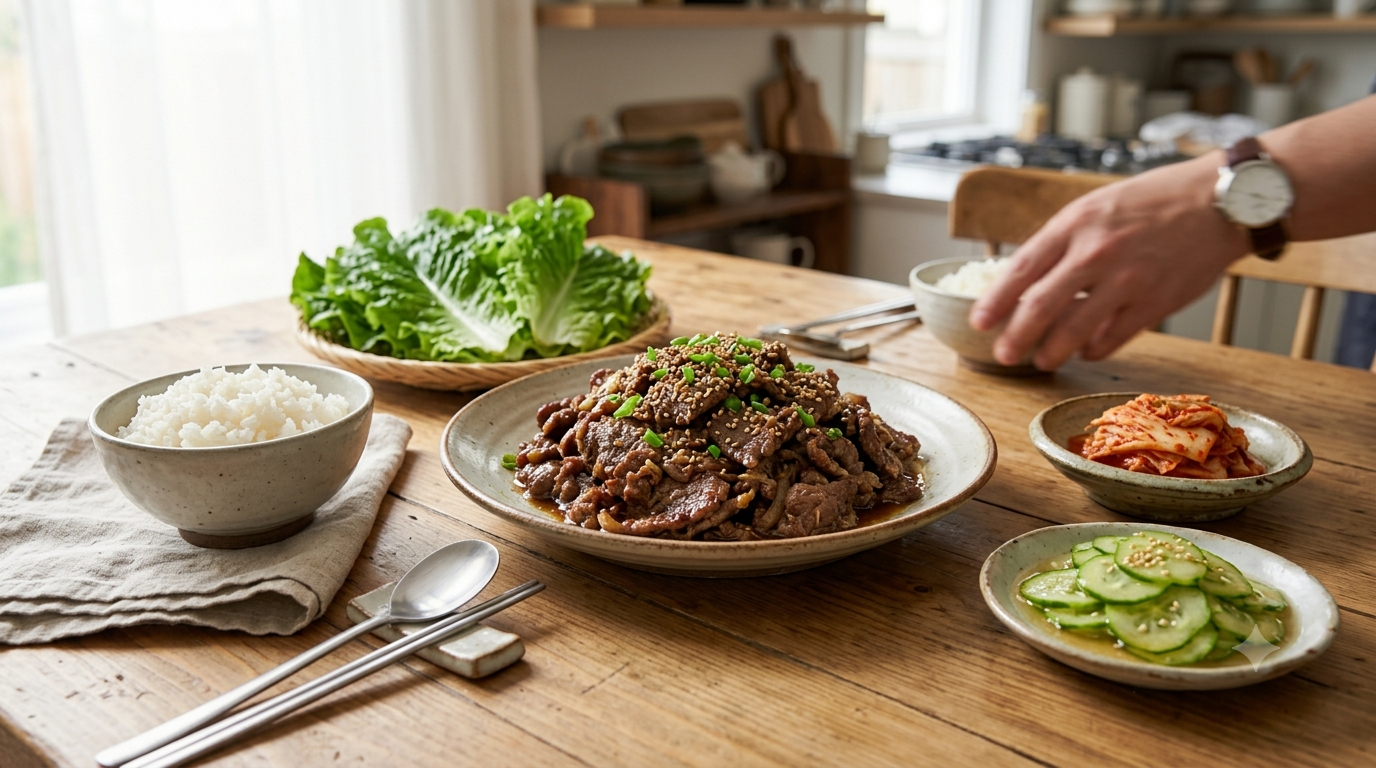
Homemade Korean bulgogi doesn’t need to be complicated. A few familiar ingredients, thinly sliced beef, and a hot skillet are enough to turn an ordinary evening into a meal worth gathering around. Let everyone build their own rice bowl or lettuce wrap, share the side dishes, and enjoy the simple pleasure of eating together.
If you’re ready to explore more Korean flavors, read our guide on how to use gochujang for more ideas to bring Korean cooking into your everyday kitchen.