

As an Amazon Associate I earn from qualifying purchases.
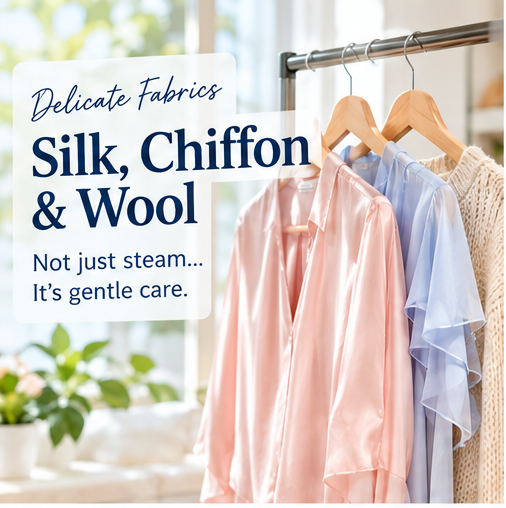
Silk, chiffon, and wool can look beautiful, but they also make many people hesitate to use a clothes steamer.
Can you steam these fabrics safely? In many cases, yes—but the technique matters. Too much heat, too much moisture, or holding the steamer too close can leave water spots, shine marks, stretching, or other damage.
This guide explains how to steam delicate fabrics more carefully, including silk, chiffon, and wool, so you can remove wrinkles without treating delicate clothing like ordinary cotton.
Can You Steam Delicate Fabrics?
Yes, but the first step is always to check the garment’s care label.
A clothes steamer can be useful for delicate fabrics because it relaxes wrinkles without pressing the fabric directly between two hot surfaces. However, delicate materials still require a lighter touch.
The safest general approach is:
- Check the care label first.
- Use a lower or gentler steam setting when available.
- Keep the steamer slightly away from the fabric.
- Keep the garment hanging naturally.
- Move the steamer continuously instead of concentrating steam in one spot.
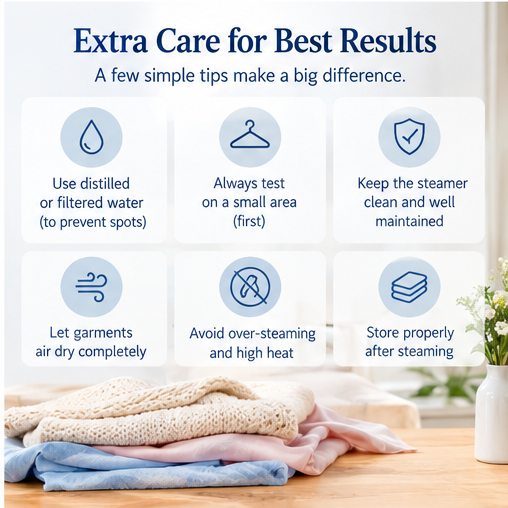
- Test an inconspicuous area first.
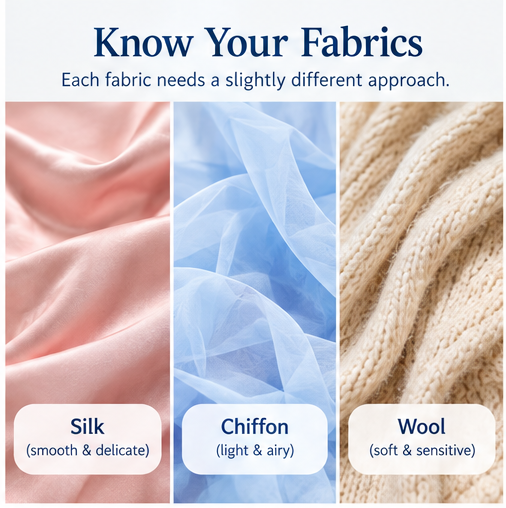
Know Your Fabric Before You Steam
Silk, chiffon, and wool do not respond to steam in exactly the same way.
Before steaming, consider the fabric itself rather than assuming that every delicate garment should be treated identically.
- Silk: Use gentle steam and avoid saturating the fabric.
- Chiffon: Work carefully because the lightweight fabric can move, stretch, or lose its shape.
- Wool: Steam can help relax wrinkles, but excessive moisture or heat can affect the fabric’s shape and surface.
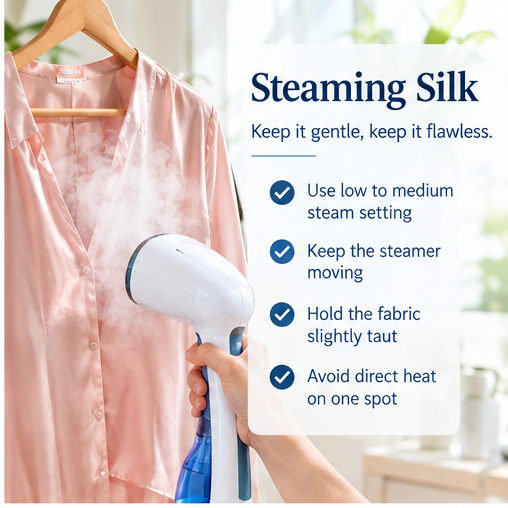
How to Steam Silk Safely
Silk is one of the fabrics where a cautious approach matters most.
Hang the garment on a sturdy hanger and allow the fabric to hang naturally. Start with gentle steam and keep the steamer from sitting directly against the surface for an extended period.
Move slowly from one area to another rather than repeatedly steaming the same spot.
If you are unsure how the particular silk garment reacts to steam, test a hidden area first. Some silk garments have special finishes or construction that require more specific care.
Best practice: When the care label says not to steam or gives specific cleaning instructions, follow the label instead.
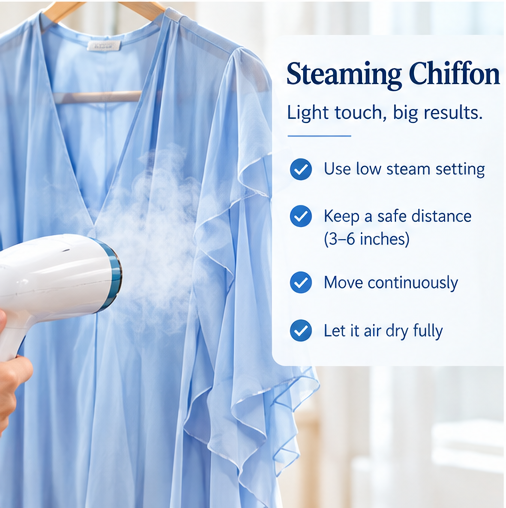
How to Steam Chiffon Safely
Chiffon is lightweight and can move easily while you are steaming it. That makes control especially important.
Hang the garment securely and let the fabric settle before steaming. Keep the steamer moving and avoid pulling the fabric downward while applying steam.
For very lightweight chiffon, use short passes instead of trying to remove every wrinkle in one long pass.
If the fabric becomes noticeably damp, stop and allow it to dry naturally before continuing.
Watch for: stretching, water droplets, and areas where the fabric begins to lose its natural shape.
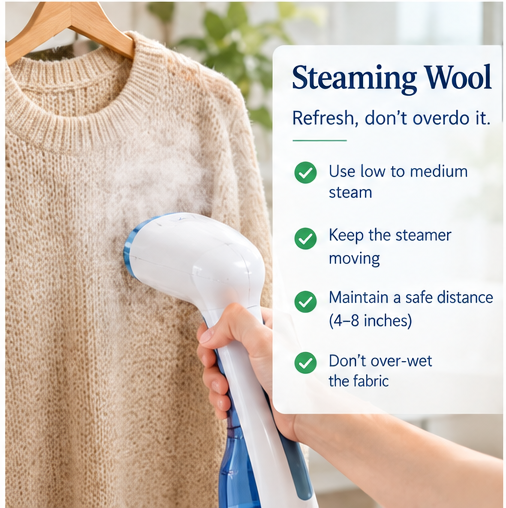
How to Steam Wool Safely
Wool often responds well to gentle steaming because steam can help relax wrinkles without flattening the fabric as aggressively as pressing.
Hang the garment properly and use gentle passes over the surface. Avoid pressing the steamer against the wool for long periods.
Pay particular attention to structured areas such as shoulders, collars, and seams. Excessive moisture or heat can affect the shape of some wool garments.
After steaming, give the garment enough time to cool and dry before wearing or storing it.
Common Mistakes When Steaming Delicate Fabrics
Most problems come from using the same technique for every type of clothing.
1. Holding the Steamer Too Close
Keeping the steam head pressed against delicate fabric can expose it to more heat and moisture than necessary. Start with some distance and adjust only if the fabric’s care instructions allow it.
2. Staying in One Spot Too Long
Continuous steam in one area can create excessive moisture. Keep the steamer moving with controlled passes.
3. Pulling Lightweight Fabric
Do not aggressively stretch chiffon or other lightweight materials while steaming. Let gravity do most of the work.
4. Ignoring the Care Label
A clothes steamer is not automatically suitable for every garment. The care label should always take priority over general steaming advice.
5. Storing the Garment Too Soon
If the fabric is still damp or warm after steaming, allow it to settle and dry before putting it back into a closet.
How to Get Better Results From a Clothes Steamer
The goal is not to use as much steam as possible. The goal is to use enough controlled steam to relax the wrinkles without unnecessarily wetting or heating the fabric.
- Fill the water tank before starting.
- Let the steamer reach its operating temperature.
- Hang the garment securely.
- Start with the gentlest suitable setting.
- Steam in smooth, continuous passes.
- Give the garment time to cool and dry.
When a Clothes Steamer May Not Be the Right Choice
A steamer is convenient, but it is not the correct solution for every garment.
If the care label specifically prohibits steaming, follow that instruction. Likewise, garments with special embellishments, coatings, glued details, or unusual construction may require more specialized care.
When there is any doubt, testing a hidden area or following the manufacturer’s care instructions is safer than experimenting on the visible part of the garment.
What Type of Clothes Steamer Should You Use?
If you regularly steam delicate clothing, look for a model that gives you good control rather than choosing only by maximum wattage.
Useful features can include:
- Multiple steam settings
- Easy handling and controlled steam output
- A water tank large enough for your typical session
- A comfortable grip
- Easy storage
For a broader comparison of power, tank size, heat-up time, and everyday use, see our clothes steamer guide.
If your main need is everyday home clothing care, you can also compare options in our best clothes steamer for home use guide.
Final Thoughts
So, can you steam silk, chiffon, and wool?
Often, yes—but delicate fabrics need a gentler approach than ordinary clothing.
Check the care label first, use controlled steam, avoid excessive moisture and heat, and keep the steamer moving. When you are uncertain, test an inconspicuous area before treating the entire garment.
Used carefully, a clothes steamer can be a practical way to refresh delicate clothing while reducing the need for direct pressing.
[…] For more detailed guidance, see our guide on how to steam delicate fabrics safely. […]
[…] For more detailed guidance, see our guide to steaming delicate fabrics safely. […]