

As an Amazon Associate, I earn from qualifying purchases. This means I may receive a commission if you purchase through links on this page, at no additional cost to you.
If you’re wondering how to fix bitter coffee, start by checking your grind size, brewing time, coffee-to-water ratio, and equipment cleanliness before buying new beans or a different grinder. Several small adjustments can improve the taste, and you may not need new equipment at all.
Coffee can taste bitter for different reasons. A grind that is too fine, excessive extraction, a dark roast, a concentrated recipe, old coffee residue, water quality, or brewing temperature may contribute to an unpleasant cup. The key is to identify the likely cause before changing everything at once.
This guide covers seven common causes, practical fixes to try at home, and three coffee grinders to consider if your current equipment does not give you the control you need.

Quick Answer: How to Fix Bitter Coffee
- Harsh or drying taste: Try a slightly coarser grind if your coffee is being over-extracted.
- Too strong or concentrated: Adjust the coffee-to-water ratio.
- Smoky or burnt flavor: Try a medium roast if you prefer a milder profile.
- Stale or unpleasant flavor: Clean your grinder and brewing equipment.
- Inconsistent results: Check whether your grinder provides suitable grind-size control.
- Unpleasant water taste: Try fresh, clean filtered water.
Change one variable at a time. This makes it easier to determine which adjustment actually improves your coffee.
1. Your Coffee Grind May Be Too Fine
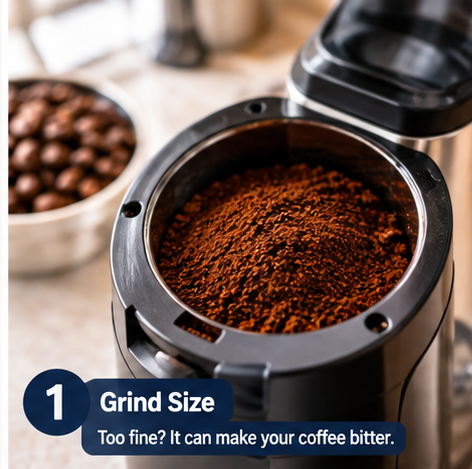
Grind size affects how quickly water extracts flavor from coffee grounds. If your grind is too fine for your brewing method, extraction may become excessive or water may flow too slowly. The result can taste harsh, dry, or unpleasantly bitter.
Espresso generally needs a fine grind, while French press coffee usually works better with a coarse grind. Drip coffee and pour-over methods often need a medium grind, although the ideal setting depends on the equipment and recipe.
How to fix it
- For harsh-tasting drip or pour-over coffee, try one step coarser.
- For French press coffee, use a coarse grind and keep steeping time consistent.
- For espresso, adjust gradually and check both flavor and flow. A grind that is too coarse can also produce an unbalanced shot.
If you are using pre-ground coffee, try a different grind size designed for your brewing method. If you grind beans at home, make small adjustments and taste the results before changing anything else.
2. Your Coffee May Be Brewing Too Long
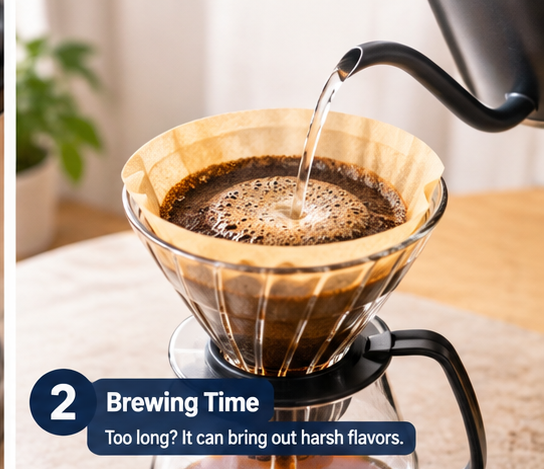
Longer contact between water and coffee can increase extraction, but brewing time alone does not determine bitterness. Grind size, water flow, coffee dose, and brewing method all influence the final flavor.
A French press left to steep much longer than your usual recipe may taste harsher. In a pour-over, unusually slow drainage may indicate that the grind is too fine or that the filter bed is becoming clogged.
How to fix it
- Use a timer so you can repeat your recipe consistently.
- If water drains unusually slowly and the coffee tastes harsh, try a slightly coarser grind.
- For French press coffee, keep steeping time consistent and pour the coffee off the grounds when it is ready.
- Do not shorten brewing time blindly. Sour, thin, or underdeveloped coffee may need a different adjustment.
The goal is a balanced cup, not simply the shortest possible brewing time.
3. Your Coffee Roast May Be Too Dark for Your Taste
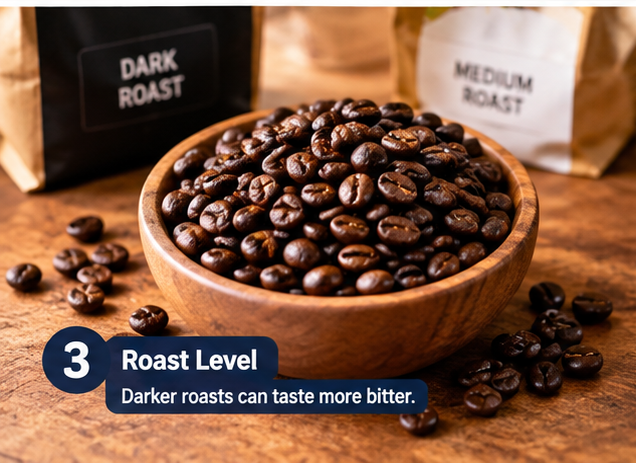
Some coffee tastes bitter even when the brewing process is reasonable. Dark roasting can produce stronger roasted, smoky, and sometimes burnt flavors. These notes may suit people who enjoy bold coffee but feel unpleasant to those who prefer a smoother cup.
Bitterness does not automatically mean that coffee is poor quality. Roast profile, bean variety, processing, freshness, and personal preference all affect the taste.
How to fix it
- Try a medium roast if your current coffee tastes smoky or burnt.
- Look for tasting notes such as chocolate, caramel, or nuts if you enjoy those flavors.
- Keep your brewing method and coffee-to-water ratio consistent when comparing different beans.
If changing the grind does not help but a different roast tastes noticeably smoother, the beans themselves may be an important part of the problem.
4. Your Coffee-to-Water Ratio May Be Too Concentrated
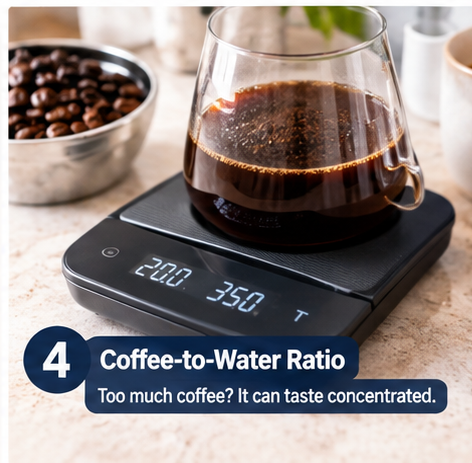
Using too much coffee for the amount of water can produce a concentrated cup. Stronger coffee may make bitter or roasted flavors more noticeable, although concentration and extraction are not the same thing.
For many filter coffee recipes, a starting ratio of about 1 gram of coffee to 16 grams of water is reasonable. You can adjust this ratio to suit your preferred strength and brewing method.
How to fix it
- If your coffee tastes too strong, use slightly less coffee or more water.
- Weigh coffee and water instead of estimating by eye.
- Change the ratio in small increments so you can identify the difference.
- If the cup is both strong and harsh, check grind size and brewing time too.
Adding water to a brewed cup can reduce its intensity. For a more consistent result, adjust the recipe for your next brew.
5. Old Coffee Oils and Residue May Be Affecting the Flavor
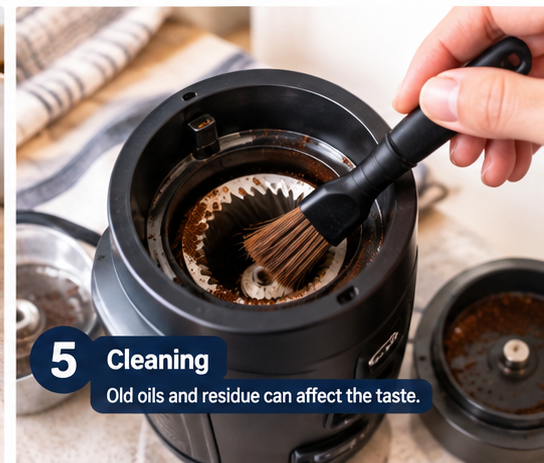
Coffee oils and fine particles can build up in a grinder, filter basket, carafe, or French press. Over time, this residue may contribute stale, rancid, or muddy flavors that can be mistaken for bitterness caused by brewing.
How to fix it
- Follow the manufacturer’s instructions for cleaning your grinder.
- Wash removable brewing parts and let them dry completely before reassembling.
- Remove trapped grounds from accessible areas with an appropriate brush.
- Never immerse an electric grinder’s motor body in water.
- Store beans in a clean, dry, airtight container away from heat and direct sunlight.
Cleaning your equipment is a sensible first step before buying anything new. If the unpleasant flavor disappears after cleaning, a replacement grinder may not be necessary.
6. Your Water May Be Changing the Flavor
Coffee is mostly water, so water quality can influence the final taste. A strong chlorine odor, unusual mineral content, or an unpleasant taste in your tap water may carry through into your coffee.
How to fix it
- Start with fresh, clean drinking water.
- If your tap water has a noticeable odor or flavor, try filtered water.
- Replace water filters according to the manufacturer’s instructions.
- Keep your water source consistent while testing other brewing adjustments.
If your water tastes fine on its own and the coffee remains harsh, continue checking the grind, brewing recipe, and beans.
7. Your Brewing Temperature May Need Attention
Water temperature affects extraction, but lowering the temperature is not a universal solution for bitter coffee. Temperature interacts with grind size, brewing time, and other variables, so it is best to make controlled adjustments rather than assume temperature is the cause.
How to fix it
- Start with the recommended settings for your brewing equipment.
- Keep the recipe consistent while testing a temperature adjustment.
- If coffee tastes harsh and over-extracted, check grind size and brewing time first.
Small, controlled changes make it easier to identify what improves the cup. Avoid changing temperature, grind size, and coffee dose simultaneously.
When Should You Consider a Different Coffee Grinder?
If you have cleaned your equipment and adjusted your recipe but still get inconsistent results, your grinder may be worth reviewing. Consider whether it provides the grind-size control your brewing method requires rather than choosing a replacement based on price alone.
Burr grinders crush beans between burr surfaces and generally provide more control over grind size than basic blade grinders. Blade grinders chop beans, which can produce less uniform particle sizes. However, a burr grinder cannot compensate for stale beans, an unsuitable recipe, or dirty brewing equipment.
Three Coffee Grinders to Consider
These three options serve different needs. Compare the grinding mechanism, capacity, and adjustment options with your brewing habits before making a purchase.
1. OXO Brew Compact Conical Burr Coffee Grinder
Best for: People who want a compact burr grinder for everyday home brewing and usually prepare smaller batches.
The OXO Brew Compact uses stainless-steel conical burrs and offers multiple grind settings. Its stated bean capacity is 50 grams, which may suit smaller daily batches and kitchens where counter space is limited.
Consider this if: You want a compact burr grinder with adjustable grind settings.
2. Baratza Encore ESP Coffee Grinder
Best for: Home coffee drinkers who want a burr grinder designed for espresso and other brewing methods.
The Baratza Encore ESP has 40 mm conical steel burrs. It may be worth considering if you want to experiment with different grind settings, including espresso, rather than use a basic blade grinder. Check that its settings and workflow suit your machine and preferred brewing style.
Consider this if: You want a grinder intended for a range of brewing styles, including espresso.
3. KRUPS Silent Vortex Electric Coffee Grinder
Best for: People who want a simple electric grinder for coffee beans and other dry ingredients.
The KRUPS Silent Vortex is a blade-style grinder rather than a burr grinder. Its product listing describes a removable, dishwasher-safe bowl and use for coffee beans, spices, and herbs. It may suit people who value a multi-purpose appliance, but its grinding mechanism does not provide the same grind-size control as the two burr grinders above.
Consider this if: You want a multi-purpose grinder and do not need the same level of grind adjustment as a burr grinder.
Which Grinder Makes the Most Sense?
- For a compact burr grinder: Consider the OXO if you usually prepare smaller batches and want adjustable settings.
- For espresso and multiple brew styles: Consider the Baratza Encore ESP and check that its adjustment range fits your setup.
- For a multi-purpose blade grinder: Consider the KRUPS if convenience for coffee and other dry ingredients matters more to you than fine grind-size control.
Before purchasing, check the current Amazon listing for price, availability, dimensions, included parts, and compatibility with your brewing setup. Product details and offers may change.
A Simple Checklist Before Your Next Cup
Before replacing your coffee equipment, run through this checklist:
- Are your beans fresh and stored properly?
- Is your grind size suitable for your brewing method?
- Are you using a consistent coffee-to-water ratio?
- Is your brewing time consistent?
- Are your grinder and brewing equipment clean?
- Does your water have an unusual taste or odor?
- Would you prefer a lighter roast?
Make one adjustment at a time and note the result. This is more useful than replacing several pieces of equipment before identifying the source of the problem.
Final Thoughts
Learning how to fix bitter coffee starts with a few practical checks: clean your equipment, confirm your coffee-to-water ratio, and adjust grind size gradually. Then consider the roast, water, and brewing temperature if the flavor still does not suit you.
A different grinder can help when grind consistency or adjustment is the problem, but it is not a guaranteed fix for every bitter cup. Identify the likely cause first so you can make a more informed decision about whether new equipment is worth the cost.
Related reading: If you enjoy practical ways to make your kitchen easier to use, explore our pantry organization ideas for a small kitchen.