

Disclosure: This article contains affiliate links. If you purchase through links in this article, we may earn a commission at no additional cost to you.
Under-bed space is easy to ignore, but it can become one of the most useful storage areas in a small bedroom. The key is choosing what to store there and making sure you can still reach it easily.
These under bed storage ideas focus on practical ways to organize seasonal clothing, bedding, shoes, and other items without turning the space into a cluttered hiding place.
Table of Contents
- 1. Measure the Space Before Buying Storage
- 2. Decide What Belongs Under the Bed
- 3. Use Rolling Bins for Easier Access
- 4. Store Seasonal Clothing
- 5. Keep Extra Bedding Together
- 6. Use Flat Storage for Low Beds
- 7. Use Clear Containers for Items You Forget
- 8. Use Soft Storage Bags for Bulky Textiles
- 9. Use One Category Per Container
- 10. Put Frequently Used Items Near the Edge
- 11. Label the Side You Can Actually See
- 12. Keep Dust-Sensitive Items Covered
- 13. Leave a Clear Pull-Out Path
- 14. Don’t Turn Under-Bed Storage Into a Junk Zone
- 15. Create a Simple Seasonal Reset
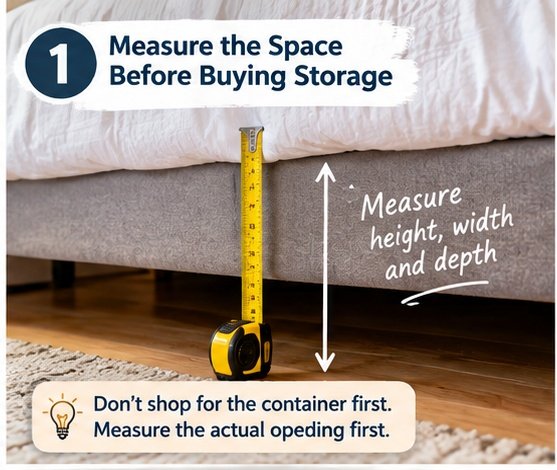
1. Measure the Space Before Buying Storage
Before buying a bin or organizer, measure the height, width, and depth available under your bed. A container that looks compact online may not fit once you account for the bed frame, wheels, or nearby furniture.
2. Decide What Belongs Under the Bed
Under-bed storage works best for items you do not need every day. Seasonal clothing, spare bedding, shoes, and occasional-use accessories are usually easier choices than daily essentials.
If you are also organizing a small closet, see our guide to small closet organization ideas for ways to divide everyday and seasonal items.
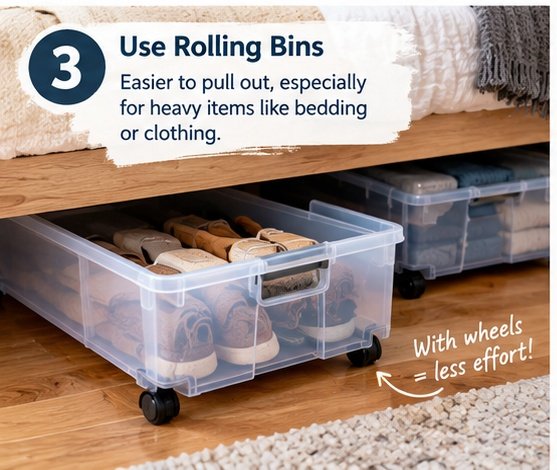
3. Use Rolling Bins for Easier Access
Rolling containers can make deep under-bed storage much easier to use. Instead of reaching underneath the bed and pulling out several containers, you can slide the one you need toward you.
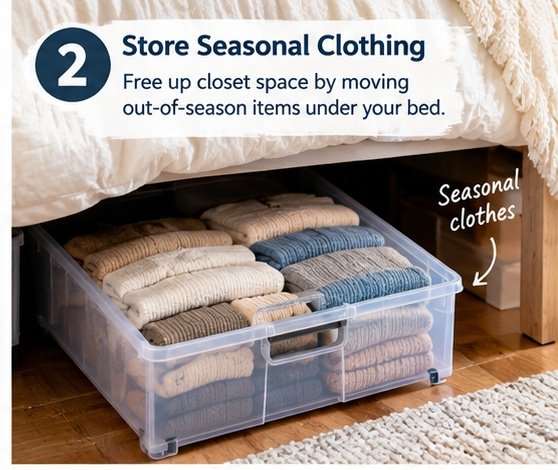
4. Store Seasonal Clothing
Under-bed space is particularly useful for clothing that is only needed during part of the year. Move winter sweaters, coats, or summer clothing into storage when the season changes and keep the current season’s wardrobe in your main closet.
5. Keep Extra Bedding Together
Extra sheets, blankets, and guest bedding can quickly take over a linen closet. A dedicated under-bed container keeps these bulky items together and makes it easier to find a complete set when needed.
6. Use Flat Storage for Low Beds
If your bed sits close to the floor, look for shallow containers designed to slide into narrow spaces. Do not force a tall container into a low clearance area, because it can become difficult to remove and may damage the container or bed frame.
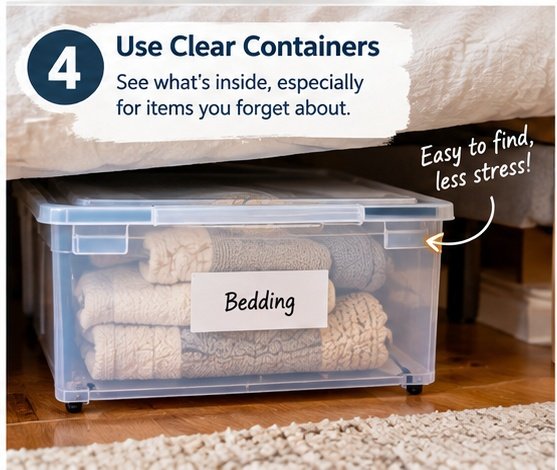
7. Use Clear Containers for Items You Forget
Clear containers are useful when you store items that you do not access often. Being able to see what is inside can prevent unnecessary searching and helps you avoid buying something you already own.
8. Use Soft Storage Bags for Bulky Textiles
Soft storage bags can work well for blankets, comforters, and clothing when rigid bins are difficult to fit into the available space. Choose bags that can be closed or covered to reduce exposure to dust.
9. Use One Category Per Container
Avoid creating a container filled with unrelated items. One bin for winter clothing, one for spare bedding, and one for shoes is easier to maintain than a single box containing everything.
10. Put Frequently Used Items Near the Edge
If you use something several times a month, place it closer to the side of the bed where you normally access the storage. Less frequently used items can go farther toward the back.
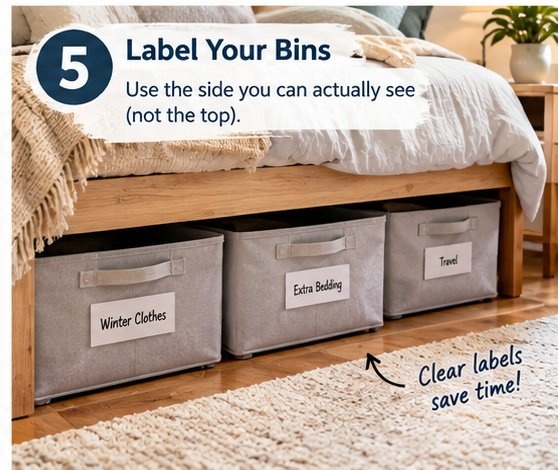
11. Label the Side You Can Actually See
Labels are most useful when you can read them without pulling the entire container out. Place the label on the front or side that faces the open edge of the bed.
If you want a more consistent labeling system throughout your home, see our guide on how to label storage bins.
12. Keep Dust-Sensitive Items Covered
Under-bed areas naturally collect dust, so clothing and bedding should be stored in containers or bags that provide suitable protection. For delicate or valuable textiles, follow more careful storage guidance rather than treating them like ordinary household items.
The Smithsonian Institution recommends clean, dry, stable storage conditions for textiles and notes that dust can contribute to abrasion and damage. See the Smithsonian’s textile storage guidance for more detailed information.
13. Leave a Clear Pull-Out Path
Do not fill every inch under the bed. Leave enough clearance to pull containers out without moving furniture or fighting with nearby objects.
14. Don’t Turn Under-Bed Storage Into a Junk Zone
Hidden storage can easily become a place where unwanted items disappear. Before putting something under the bed, ask whether you actually plan to use it again. If not, donate, recycle, or discard it instead.
15. Create a Simple Seasonal Reset
Under-bed storage becomes much easier to maintain when you review it at the beginning or end of each season. Remove items you no longer need, return misplaced items to their categories, and update labels when necessary.
Want an Easier Way to Keep Storage Organized?
A simple labeling system can make hidden storage much easier to find and maintain.
Final Thoughts on Under-Bed Storage Ideas
The best under bed storage ideas are not about filling every empty space. They are about using hidden space for the right categories while keeping everything accessible.
Start by measuring the available clearance, choose containers that fit, group similar items together, and label what you cannot easily see. With a simple system, the space under your bed can become useful storage instead of another place for clutter to disappear.